Removing Ugly Black Streaks and Moss from Your Shady Gibsonia Property
Your Gibsonia roof is under constant attack from the region’s high humidity and dense tree canopy. Those black streaks aren’t just cosmetic flaws—they’re colonies of Gloeocapsa Magma algae feeding on your asphalt shingles’ limestone filler. Left untreated, moss and algae can cut your roof’s lifespan by up to 30% and void manufacturer warranties. Asphalt Roofing Manufacturers Association (ARMA).
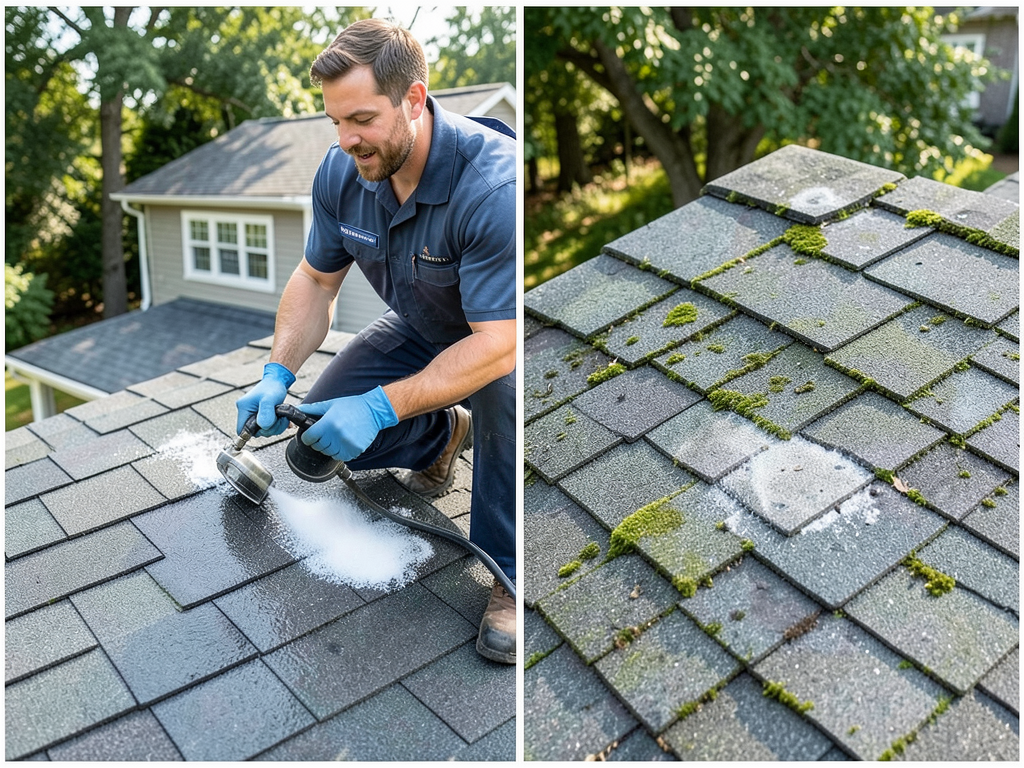
We use a low-pressure soft-wash method that eliminates black streaks and moss without damaging shingles. Our biodegradable cleansers break down the organic growth at the molecular level while zinc or copper strips prevent future infestations. This isn’t pressure washing—it’s targeted roof restoration that protects your investment.
Call (878) 209-5522 today to schedule your inspection. We serve Gibsonia and surrounding North Hills communities including Wexford and Cranberry Township.
Why Moss is a Threat to Pittsburgh Roofs (The Climate Factor)
Pittsburgh’s climate creates perfect conditions for moss and algae growth. The region’s average annual humidity of 73% combined with summer temperatures in the 80s-90s provides ideal breeding grounds for Gloeocapsa Magma and other organisms. Your Gibsonia property likely sits in a heavily wooded area where tree canopy blocks sunlight and traps moisture against roof surfaces.
According to the Pennsylvania Department of Environmental Protection, Western Pennsylvania’s climate zone experiences 38-42 freeze-thaw cycles annually. Each cycle causes microscopic cracks in asphalt shingles where moss spores can take hold. The freeze-thaw effect is particularly severe in Gibsonia due to elevation changes and north-facing slopes that receive less direct sunlight. EPA Energy Star program.
Local building codes require ice dam protection in Allegheny County’s climate zone 5A, but many older Gibsonia homes were built before these standards. This creates additional vulnerabilities where water backs up under shingles, providing moisture for moss colonies to establish themselves.
Common Moss Growth Areas in Gibsonia:
- North-facing roof slopes that receive minimal direct sunlight
- Areas beneath overhanging tree branches
- Roof valleys where debris collects
- Shaded sections near chimneys or dormers
Our Safe Soft-Wash Method vs. Destructive Pressure Washing
Pressure washing might seem like the obvious solution, but it’s actually the worst thing you can do to your roof. High-pressure water blasts away the protective granules from asphalt shingles, exposing the asphalt layer to UV damage. This process can void your roof warranty and reduce its lifespan by 50% or more. How Much a Full Roof Replacement Actually Costs in Pittsburgh Right Now.
Our soft-wash method uses specialized equipment that delivers cleaning solutions at pressures below 100 PSI—less than your garden hose. We apply a proprietary blend of sodium percarbonate and quaternary ammonium compounds that break down organic matter at the cellular level without mechanical abrasion.
The process works in three stages:
- Application of eco-friendly cleaning solution that penetrates moss and algae cells
- 30-45 minute dwell time for chemical breakdown of organic material
- Rinse with low-pressure water to remove dead growth and residue
According to the Asphalt Roofing Manufacturers Association (ARMA), soft washing is the only cleaning method that maintains shingle warranties. Pressure washing can cause granule loss exceeding 25% in a single treatment, while our method preserves 100% of your shingle’s protective coating. Why Metal Roofing is Becoming the Top Choice for Homes in North Hills.
Soft Washing vs. Pressure Washing Comparison:
| Method | Pressure (PSI) | Chemicals Used | Risk to Shingles |
|---|---|---|---|
| Soft Washing | 50-100 | Biodegradable cleansers | Minimal |
| Pressure Washing | 1500-3000 | None | High – granule loss |
The Real Cost of Roof Moss: Shingle Damage and Lifespan
Moss and algae don’t just look bad—they actively destroy your roof from the inside out. Moss roots penetrate between shingle layers, lifting edges and creating entry points for water. During freeze-thaw cycles, this moisture expands and contracts, causing cracks that grow larger each year.
The National Association of Home Builders reports that untreated moss can reduce asphalt shingle lifespan from 25-30 years to just 15-20 years. For a typical Gibsonia home, that’s a loss of $8,000-$12,000 in roof value over the lifetime of the structure.
Beyond physical damage, moss creates several hidden costs:
- Increased cooling costs from algae’s dark color absorbing heat
- Higher insurance premiums due to perceived maintenance issues
- Decreased home resale value—buyers often demand roof replacement
- Potential code violations if growth blocks proper water drainage
The EPA’s Energy Star program notes that clean, light-colored roofs can reduce cooling costs by 10-15% in Pennsylvania’s climate. Moss-covered roofs work against this efficiency, trapping heat and forcing your HVAC system to work harder during summer months.
Cost Impact of Untreated Moss Growth:
| Impact Factor | Annual Cost Increase |
|---|---|
| Energy Efficiency Loss | $150-300 |
| Insurance Premium Increase | $100-250 |
| Reduced Home Value | $5,000-15,000 |
| Premature Replacement Need | $8,000-12,000 |
Preventive Measures: Keeping Moss Off Your Roof Long-Term
Prevention is far more cost-effective than removal. After we clean your roof, we install zinc or copper strips along the ridge line. These metals release ions during rainfall that create an environment where moss and algae cannot survive. One installation lasts the lifetime of your roof.
Pennsylvania’s building code (IBC Section 1507.2.7) requires proper roof ventilation to prevent moisture buildup. Many Gibsonia homes have inadequate ventilation due to older construction methods. We assess and upgrade your attic ventilation as part of our comprehensive approach.
Tree management is crucial in wooded areas like Gibsonia. We recommend:
- Trimming branches to maintain 10-foot clearance from roof
- Removing dead or overhanging branches that drop debris
- Improving air circulation around your home’s perimeter
- Installing gutter guards to prevent organic matter buildup
According to the National Roofing Contractors Association, proper preventive maintenance can extend roof life by 5-7 years. This includes annual inspections, prompt repair of damaged shingles, and keeping the roof surface clean of debris that retains moisture. Roofing Scranton.
We also apply a clear, breathable sealant after cleaning that creates an invisible barrier against future growth. This nano-technology coating doesn’t affect your roof’s appearance but makes it difficult for spores to establish new colonies.
Frequently Asked Questions About Pittsburgh Roof Cleaning
How long does the cleaning process take?
Most Gibsonia homes require 2-4 hours for complete cleaning and treatment. The chemical dwell time is the longest phase, allowing the solution to fully break down organic growth without rushing the process.
Will the cleaning chemicals harm my landscaping?
Our biodegradable solutions are safe for plants when properly applied. We pre-soak landscaping and rinse thoroughly after treatment. The sodium percarbonate breaks down into oxygen and water within 24 hours.
How often should I have my roof cleaned?
With proper preventive measures, most Pittsburgh roofs need cleaning only once every 5-7 years. Homes in heavily wooded areas like Gibsonia might need treatment every 3-4 years without zinc strips installed.
Can I clean the roof myself?
DIY cleaning is dangerous on steep pitches common in Gibsonia and often causes more damage than good. Consumer-grade pressure washers exceed safe pressure levels, and improper chemical mixing can damage shingles or harm vegetation.
Does roof cleaning affect my home insurance?
Regular maintenance, including professional cleaning, demonstrates responsible homeownership. Some insurers offer premium discounts for documented roof maintenance, while visible neglect can lead to coverage issues or higher rates.
What’s the difference between moss and algae?
Algae (Gloeocapsa Magma) creates black streaks and is primarily cosmetic. Moss is a plant that grows in thick patches, retains moisture, and causes physical damage to shingles. Both require different treatment approaches for complete removal.
Call (878) 209-5522 today to schedule your inspection. Don’t let another season of growth damage your roof. Our Gibsonia-based team understands the unique challenges of Pittsburgh’s climate and can restore your roof’s appearance while protecting its integrity for years to come.
Pick up the phone and call (878) 209-5522 before the next storm hits. Moss and algae grow exponentially during wet seasons, and waiting means more extensive—and expensive—damage to your roof structure.
You may also find this helpful. How Overhanging Tree Limbs in Allison Park Can Secretly Ruin Your Roof.
{
“@context”: “https://schema.org”,
“@type”: “BlogPosting”,
“headline”: “Removing Ugly Black Streaks and Moss from Your Shady Gibsonia Property”,
“description”: “Tired of black streaks and moss ruining your Gibsonia roof? Learn how Pittsburgh’s humidity and tree canopy cause these issues and how our soft-wash method safely restores your roof.”,
“wordCount”: 1288,
“datePublished”: “2026-03-15T11:08:00.000Z”,
“dateModified”: “2026-03-15T11:08:00.000Z”,
“inLanguage”: “en-US”,
“mainEntityOfPage”: {
“@type”: “WebPage”,
“@id”: “https://victoryroofingpittsburgh.com”
},
“publisher”: {
“@type”: “LocalBusiness”,
“name”: “Victory Roofing Pittsburgh”,
“url”: “https://victoryroofingpittsburgh.com”
},
“author”: {
“@type”: “Organization”,
“name”: “Victory Roofing Pittsburgh”,
“url”: “https://victoryroofingpittsburgh.com”
},
“image”: {
“@type”: “ImageObject”,
“url”: “https://victoryroofingpittsburgh.com/wp-content/uploads/2026/03/removing-ugly-black-streaks-and-moss-from-your-sha-1.png”
}
}
{
“@context”: “https://schema.org”,
“@type”: “RoofingContractor”,
“name”: “Victory Roofing Pittsburgh”,
“url”: “https://victoryroofingpittsburgh.com”,
“address”: {
“@type”: “PostalAddress”,
“addressLocality”: “Pittsburgh”
},
“areaServed”: {
“@type”: “City”,
“name”: “Pittsburgh”
}
}
{
“@context”: “https://schema.org”,
“@type”: “FAQPage”,
“mainEntity”: [
{
“@type”: “Question”,
“name”: “How long does the cleaning process take?”,
“acceptedAnswer”: {
“@type”: “Answer”,
“text”: “Most Gibsonia homes require 2-4 hours for complete cleaning and treatment. The chemical dwell time is the longest phase, allowing the solution to fully break down organic growth without rushing the process.”
}
},
{
“@type”: “Question”,
“name”: “Will the cleaning chemicals harm my landscaping?”,
“acceptedAnswer”: {
“@type”: “Answer”,
“text”: “Our biodegradable solutions are safe for plants when properly applied. We pre-soak landscaping and rinse thoroughly after treatment. The sodium percarbonate breaks down into oxygen and water within 24 hours.”
}
},
{
“@type”: “Question”,
“name”: “How often should I have my roof cleaned?”,
“acceptedAnswer”: {
“@type”: “Answer”,
“text”: “With proper preventive measures, most Pittsburgh roofs need cleaning only once every 5-7 years. Homes in heavily wooded areas like Gibsonia might need treatment every 3-4 years without zinc strips installed.”
}
},
{
“@type”: “Question”,
“name”: “Can I clean the roof myself?”,
“acceptedAnswer”: {
“@type”: “Answer”,
“text”: “DIY cleaning is dangerous on steep pitches common in Gibsonia and often causes more damage than good. Consumer-grade pressure washers exceed safe pressure levels, and improper chemical mixing can damage shingles or harm vegetation.”
}
},
{
“@type”: “Question”,
“name”: “Does roof cleaning affect my home insurance?”,
“acceptedAnswer”: {
“@type”: “Answer”,
“text”: “Regular maintenance, including professional cleaning, demonstrates responsible homeownership. Some insurers offer premium discounts for documented roof maintenance, while visible neglect can lead to coverage issues or higher rates.”
}
},
{
“@type”: “Question”,
“name”: “What’s the difference between moss and algae?”,
“acceptedAnswer”: {
“@type”: “Answer”,
“text”: “Algae (Gloeocapsa Magma) creates black streaks and is primarily cosmetic. Moss is a plant that grows in thick patches, retains moisture, and causes physical damage to shingles. Both require different treatment approaches for complete removal.”
}
}
]
}
{
“@context”: “https://schema.org”,
“@type”: “BreadcrumbList”,
“itemListElement”: [
{
“@type”: “ListItem”,
“position”: 1,
“name”: “Home”,
“item”: “https://victoryroofingpittsburgh.com”
},
{
“@type”: “ListItem”,
“position”: 2,
“name”: “Blog”,
“item”: “https://victoryroofingpittsburgh.com/blog”
},
{
“@type”: “ListItem”,
“position”: 3,
“name”: “Removing Ugly Black Streaks and Moss from Your Shady Gibsonia Property”
}
]
}
{
“@context”: “https://schema.org”,
“@type”: “Service”,
“serviceType”: “Roofing”,
“provider”: {
“@type”: “LocalBusiness”,
“name”: “Victory Roofing Pittsburgh”,
“url”: “https://victoryroofingpittsburgh.com”
},
“areaServed”: {
“@type”: “City”,
“name”: “Pittsburgh”
},
“description”: “Tired of black streaks and moss ruining your Gibsonia roof? Learn how Pittsburgh’s humidity and tree canopy cause these issues and how our soft-wash method safely restores your roof.”
}