Why DIY Roof Repairs Often Cost More in the Long Run for Wilkinsburg Homeowners
Many Wilkinsburg homeowners consider fixing roof leaks themselves to save money. But what seems like a cost-cutting measure often turns into a much larger expense. From safety hazards to warranty voidance and code violations, DIY roofing can create problems that professional contractors like Victory Roofing are trained to prevent. Why Metal Roofing is Becoming the Top Choice for Homes in North Hills.
Wilkinsburg’s aging housing stock, with many homes built before 1940, presents unique challenges. These structures often have multiple layers of roofing material, deteriorated decking, and outdated flashing systems. Without proper training, homeowners risk structural damage, personal injury, and code violations that can cost thousands to remediate. Roofing Scranton.
Professional roofers understand how to navigate Wilkinsburg’s specific building requirements, including the Pittsburgh Department of Permits, Licenses, and Inspections (PLI) mandates for ice dam protection in cold-climate zones. They also carry liability insurance and worker’s compensation, protecting you from financial responsibility if accidents occur on your property.
The Hidden Dangers of DIY Roofing in Pittsburgh
Roofing work involves more than climbing a ladder and nailing shingles. Professional roofers follow OSHA safety standards that require fall protection equipment when working above six feet. Many Wilkinsburg homes have steep pitches common in early 20th-century architecture, making falls particularly dangerous. OSHA Roofing Safety Standards.
Beyond the obvious fall risks, DIYers often encounter hidden dangers. Old roof decking can be severely rotted, creating soft spots that collapse under weight. Asbestos-containing materials were commonly used in roofing products manufactured before 1980, and disturbing these materials without proper containment creates serious health hazards.
Professional contractors use specialized equipment like roof jacks, safety harnesses, and scaffolding systems designed to distribute weight properly. They also understand how to identify compromised structural elements before beginning work, preventing accidents that could result in severe injury or death.
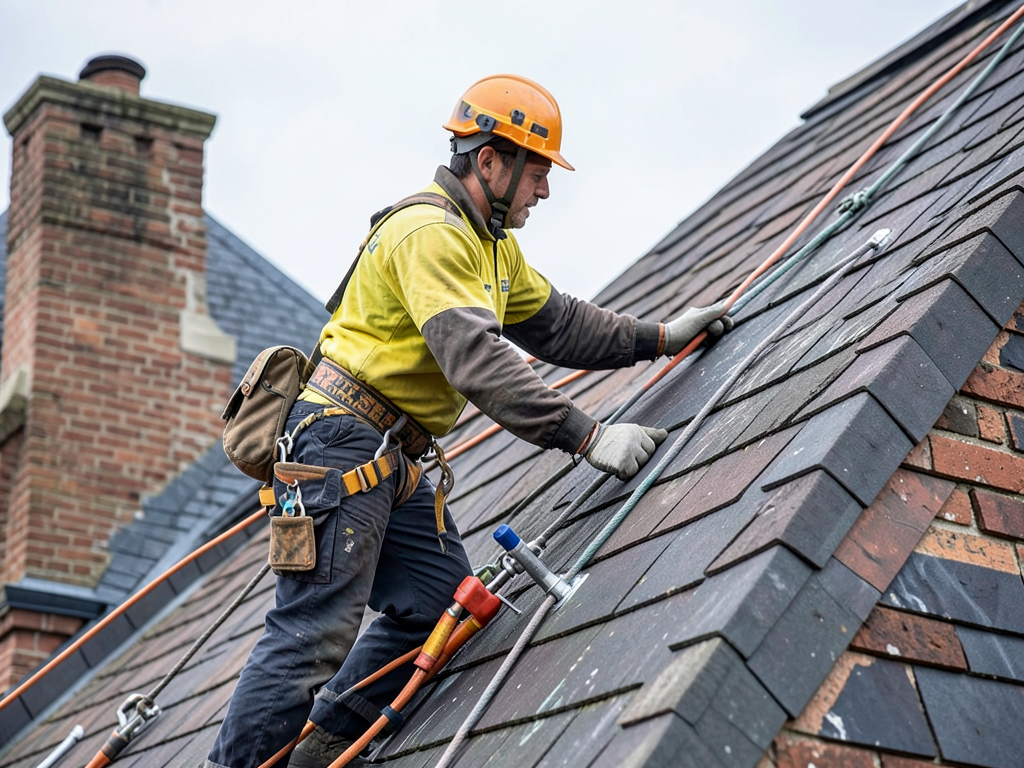
Photo showing proper fall protection equipment setup on a steep-pitch Wilkinsburg roof, including harness, roof jacks, and safety line attachment points.
The Financial Reality: Why ‘Saving Money’ Often Costs More
The initial cost savings of DIY roofing quickly disappears when you factor in the specialized tools required. Professional roofers invest thousands in equipment like pneumatic nailers, material hoists, and safety gear. Renting these tools for a single project often costs hundreds of dollars, and using them incorrectly can damage materials or create unsafe conditions.
More significantly, DIY repairs frequently void manufacturer warranties. Major brands like GAF, Owens Corning, and CertainTeed require installation by certified contractors to maintain warranty coverage. A single DIY repair can void an entire roof’s warranty, leaving you responsible for future failures that would have been covered.
According to the National Roofing Contractors Association, approximately 60% of DIY roof repairs require professional correction within two years. These corrections often cost 150-200% more than the original DIY attempt due to the need to remove and replace improperly installed materials. National Roofing Contractors Association.

Before-and-after comparison showing improper DIY flashing installation (left) versus professional step flashing that prevents water infiltration (right).
Pittsburgh-Specific Climate Challenges
Wilkinsburg’s location in the Allegheny Plateau exposes roofs to severe freeze-thaw cycles. When temperatures fluctuate rapidly, as they often do in Western Pennsylvania, water trapped under improperly installed shingles expands and contracts. This process, known as ice lensing, can lift entire sections of roofing material.
The International Building Code requires ice dam protection extending at least 24 inches inside the exterior wall line for climate zones like Pittsburgh’s. Many DIYers skip this critical step, leading to ice dams that force water under shingles and into attic spaces. This moisture creates perfect conditions for mold growth and structural rot.
Professional roofers also understand how to install proper ventilation systems that prevent heat buildup in attics. Without adequate ventilation, snow on the roof melts from below, runs down to the eaves, and refreezes, creating the very ice dams that cause leaks. This cycle repeats throughout winter, causing progressive damage.
Technical Pitfalls: Flashing, Ventilation, and Nailing Patterns
Proper flashing installation requires understanding water’s behavior at different angles and pressures. Step flashing around chimneys and walls must overlap in specific patterns to direct water away from vulnerable joints. DIY installations often use continuous flashing or improper overlaps, creating direct pathways for water infiltration.. Read more about Understanding the Difference Between Shingle Warranties and Workmanship Guarantees in Brentwood.
Nailing patterns significantly impact shingle performance. Manufacturer specifications typically require nails placed in specific locations with particular spacing. Incorrect nailing allows shingles to lift in high winds, creating entry points for water and wind-driven debris. Professional roofers use nail guns calibrated to the correct pressure and nail type.
Ventilation calculations follow strict formulas based on attic square footage and roof pitch. Insufficient ventilation causes multiple problems: excessive heat in summer reduces shingle lifespan, trapped moisture in winter creates ice dams, and poor air quality can affect indoor air throughout the home.
Legal and Insurance Risks
Pennsylvania building codes require permits for most roofing work, including repairs affecting more than 100 square feet. The Pittsburgh PLI department conducts inspections to verify compliance with local amendments to the International Building Code. Unpermitted work can result in stop-work orders, fines up to $2,500 per day, and mandatory removal of non-compliant installations.
Homeowners insurance policies typically exclude coverage for damage resulting from unpermitted work or DIY repairs. If a DIY repair fails and causes interior damage, your insurance company may deny the claim, leaving you responsible for both the repair and any resulting water damage to ceilings, walls, and personal property.
Professional contractors carry liability insurance and workers’ compensation coverage. If an employee is injured on your property, their insurance covers medical expenses and lost wages. Without this coverage, homeowners can be held personally liable for injuries occurring during DIY projects.
The Cost-Benefit Analysis: DIY vs. Professional Installation
| Factor | DIY Roofing | Professional Roofing |
|---|---|---|
| Initial Material Cost | $2,500-4,000 | $3,000-5,000 |
| Tool Rental/Purchase | $300-600 | Included |
| Permit Costs | $150-300 (if obtained) | Included |
| Warranty Coverage | None | 25-year minimum |
| Labor Hours | 40-60 hours | 15-25 hours |
| Expected Lifespan | 5-8 years | 20-25 years |
| Insurance Coverage | None | Full liability |
| Resale Value Impact | Negative | Positive |
Common DIY Mistakes That Professionals Never Make
Professional roofers follow established protocols that prevent common failures. One frequent DIY mistake involves improper underlayment installation. Synthetic underlayments require specific overlap patterns and fastening schedules. When installed incorrectly, they can tear or allow water infiltration during wind-driven rain.
Another critical error involves chimney cricket installation. These small, peaked structures divert water around chimneys wider than 30 inches. Without proper crickets, water pools behind chimneys, finding its way through even the best flashing systems. Most DIYers never consider this specialized component.
Professional roofers also understand material compatibility. Mixing different shingle brands or using incompatible underlayment materials can cause chemical reactions that accelerate deterioration. They maintain relationships with suppliers who provide technical support and warranty validation for their installations.
Secondary Water Damage and Mold Growth
Water infiltration from DIY repairs often goes unnoticed until significant damage occurs. Moisture trapped in attic spaces creates ideal conditions for mold growth within 24-48 hours. Common mold species like Stachybotrys chartarum (black mold) can cause respiratory problems and require professional remediation costing thousands of dollars.
Structural damage compounds over time. Water-soaked roof decking loses structural integrity, potentially leading to ceiling collapses. Wet insulation loses its R-value, increasing energy costs. Electrical wiring exposed to moisture creates fire hazards. These secondary damages often exceed the original repair cost many times over.
Professional roofers use moisture meters and thermal imaging cameras to detect existing water damage before beginning work. They also install proper ice and water shield in vulnerable areas, creating redundant barriers against water infiltration that DIY installations typically lack.
Hidden Costs of Specialized Roofing Tools
Professional roofing requires specialized tools that most homeowners don’t own and shouldn’t purchase for a single project. A quality roofing nailer costs $300-500, and using a standard framing nailer on shingles can cause cracks and premature failure. Material hoists for lifting shingles to the roof cost $100-200 per day to rent.
Safety equipment represents another significant expense. OSHA-compliant fall protection systems include harnesses ($100-200), roof anchors ($50-100 each), and lifelines ($150-300). Using inadequate or damaged safety equipment violates federal regulations and creates liability exposure for homeowners.
Professional contractors amortize these tool costs across multiple jobs and maintain them properly. They also receive volume discounts on materials that DIYers cannot access, often offsetting labor costs significantly.
Home Resale Value Impact of Unpermitted Work
Real estate transactions frequently uncover unpermitted DIY repairs during home inspections. Buyers and their agents view unpermitted work as a red flag, often requiring price reductions or repair credits. Some transactions fall through entirely when significant unpermitted modifications are discovered.
Professional roof installations with proper permits and warranties become selling points that increase property value. They demonstrate quality workmanship and provide future owners with transferrable warranties. This documentation can add 3-5% to a home’s appraised value compared to similar properties with questionable DIY repairs.
Additionally, insurance companies may refuse to insure homes with unpermitted modifications or charge higher premiums. This can complicate financing and reduce the pool of potential buyers when selling.
Frequently Asked Questions
Can I legally do my own roof repairs in Wilkinsburg?
Yes, Pennsylvania law allows homeowners to perform their own repairs, but you must obtain proper permits and follow local building codes. The Pittsburgh PLI department requires permits for most roofing work, and unpermitted repairs can result in fines and mandatory corrections.
How much does a professional roof repair cost in Wilkinsburg?
Professional roof repairs in Wilkinsburg typically range from $300-1,500 depending on the damage extent and repair complexity. Most contractors offer free inspections and can provide accurate estimates after evaluating your specific situation.
Will DIY roof repairs void my homeowners insurance?
DIY repairs themselves don’t void your policy, but damage resulting from unpermitted or improperly executed work may not be covered. Many insurance companies require professional repairs for claims related to roof damage to ensure code compliance and proper workmanship.
How long do professional roof repairs last compared to DIY fixes?
Professional repairs typically last 15-25 years when properly installed, while DIY fixes often fail within 2-5 years. The difference stems from proper material selection, correct installation techniques, and adequate underlayment and flashing systems that professionals use.
What are the biggest risks of DIY roof repairs?
The primary risks include personal injury from falls, structural damage from walking on compromised decking, water infiltration from improper installation, code violations resulting in fines, voided warranties, and insurance claim denials. These risks often cost far more than hiring a professional initially.
Conclusion: The Smart Choice for Wilkinsburg Homeowners
DIY roof repairs might seem like a way to save money, but the hidden costs, safety risks, and potential for catastrophic failure make them a poor investment for most homeowners. Professional roofing contractors bring expertise, proper equipment, insurance coverage, and warranty protection that DIY repairs cannot match. Expert Slate Roof Repair Services for Sewickley Historic Properties.
Wilkinsburg’s specific climate challenges, building codes, and architectural styles require specialized knowledge that comes from years of local experience. Victory Roofing understands these unique requirements and provides solutions that protect your home for decades rather than years.
Don’t risk your safety, your home’s value, or your financial security on a DIY repair that could cost far more in the long run. Call (878) 209-5522 today to schedule your professional roof inspection and get an accurate assessment of your roofing needs.
Professional roof inspection using thermal imaging to detect moisture intrusion and insulation deficiencies in a Wilkinsburg attic space.
{
“@context”: “https://schema.org”,
“@type”: “BlogPosting”,
“headline”: “Why DIY Roof Repairs Often Cost More in the Long Run for Wilkinsburg Homeowners”,
“description”: “DIY roof repairs in Wilkinsburg can lead to costly mistakes. Learn why professional roofing services from Victory Roofing ensure safety, warranty compliance, and long-term savings.”,
“wordCount”: 1903,
“datePublished”: “2026-04-08T07:39:00.000Z”,
“dateModified”: “2026-04-08T07:39:00.000Z”,
“inLanguage”: “en-US”,
“mainEntityOfPage”: {
“@type”: “WebPage”,
“@id”: “https://victoryroofingpittsburgh.com”
},
“publisher”: {
“@type”: “LocalBusiness”,
“name”: “Victory Roofing Pittsburgh”,
“url”: “https://victoryroofingpittsburgh.com”
},
“author”: {
“@type”: “Organization”,
“name”: “Victory Roofing Pittsburgh”,
“url”: “https://victoryroofingpittsburgh.com”
},
“image”: {
“@type”: “ImageObject”,
“url”: “https://victoryroofingpittsburgh.com/wp-content/uploads/2026/03/why-diy-roof-repairs-often-cost-more-in-the-long-r-1.png”
}
}
{
“@context”: “https://schema.org”,
“@type”: “RoofingContractor”,
“name”: “Victory Roofing Pittsburgh”,
“url”: “https://victoryroofingpittsburgh.com”,
“address”: {
“@type”: “PostalAddress”,
“addressLocality”: “Pittsburgh”
},
“areaServed”: {
“@type”: “City”,
“name”: “Pittsburgh”
}
}
{
“@context”: “https://schema.org”,
“@type”: “FAQPage”,
“mainEntity”: [
{
“@type”: “Question”,
“name”: “Can I legally do my own roof repairs in Wilkinsburg?”,
“acceptedAnswer”: {
“@type”: “Answer”,
“text”: “Yes, Pennsylvania law allows homeowners to perform their own repairs, but you must obtain proper permits and follow local building codes. The Pittsburgh PLI department requires permits for most roofing work, and unpermitted repairs can result in fines and mandatory corrections.”
}
},
{
“@type”: “Question”,
“name”: “How much does a professional roof repair cost in Wilkinsburg?”,
“acceptedAnswer”: {
“@type”: “Answer”,
“text”: “Professional roof repairs in Wilkinsburg typically range from $300-1,500 depending on the damage extent and repair complexity. Most contractors offer free inspections and can provide accurate estimates after evaluating your specific situation.”
}
},
{
“@type”: “Question”,
“name”: “Will DIY roof repairs void my homeowners insurance?”,
“acceptedAnswer”: {
“@type”: “Answer”,
“text”: “DIY repairs themselves don’t void your policy, but damage resulting from unpermitted or improperly executed work may not be covered. Many insurance companies require professional repairs for claims related to roof damage to ensure code compliance and proper workmanship.”
}
},
{
“@type”: “Question”,
“name”: “How long do professional roof repairs last compared to DIY fixes?”,
“acceptedAnswer”: {
“@type”: “Answer”,
“text”: “Professional repairs typically last 15-25 years when properly installed, while DIY fixes often fail within 2-5 years. The difference stems from proper material selection, correct installation techniques, and adequate underlayment and flashing systems that professionals use.”
}
}
]
}
{
“@context”: “https://schema.org”,
“@type”: “BreadcrumbList”,
“itemListElement”: [
{
“@type”: “ListItem”,
“position”: 1,
“name”: “Home”,
“item”: “https://victoryroofingpittsburgh.com”
},
{
“@type”: “ListItem”,
“position”: 2,
“name”: “Blog”,
“item”: “https://victoryroofingpittsburgh.com/blog”
},
{
“@type”: “ListItem”,
“position”: 3,
“name”: “Why DIY Roof Repairs Often Cost More in the Long Run for Wilkinsburg Homeowners”
}
]
}
{
“@context”: “https://schema.org”,
“@type”: “Service”,
“serviceType”: “Roofing”,
“provider”: {
“@type”: “LocalBusiness”,
“name”: “Victory Roofing Pittsburgh”,
“url”: “https://victoryroofingpittsburgh.com”
},
“areaServed”: {
“@type”: “City”,
“name”: “Pittsburgh”
},
“description”: “DIY roof repairs in Wilkinsburg can lead to costly mistakes. Learn why professional roofing services from Victory Roofing ensure safety, warranty compliance, and long-term savings.”
}