
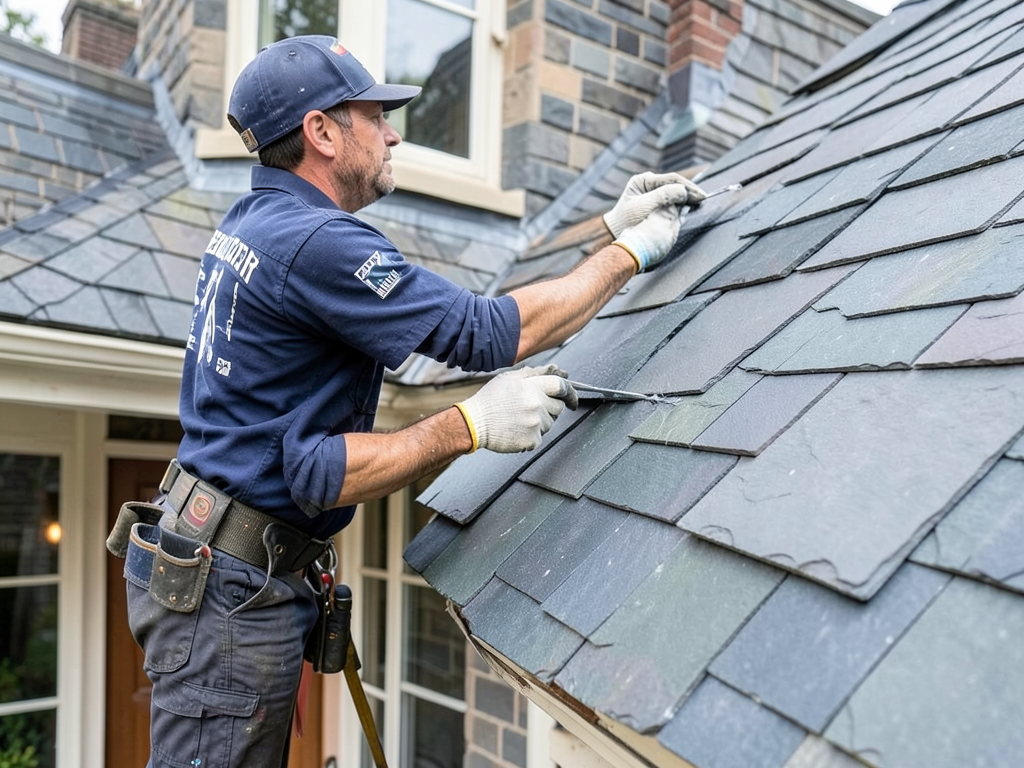
A Complete Comparison of Real Slate and Synthetic Shingles for Your Regent Square Property
Choosing between real slate and synthetic shingles for your Regent Square home means weighing authenticity against practicality. Real slate offers unmatched beauty and longevity but weighs up to 1,500 pounds per square and requires structural reinforcement. Synthetic options like DaVinci or EcoStar provide similar aesthetics at one-third the weight and cost while resisting Pittsburgh’s freeze-thaw cycles better than natural stone. Expert Slate Roof Repair Services for Sewickley Historic Properties.
Real slate costs $1,500 to $2,500 per square installed in Pittsburgh versus $600 to $1,200 for premium synthetic slate. The price gap reflects more than material costs. Real slate demands specialized masons who charge $75 to $125 per hour versus $45 to $75 for composite installers. Your 2,000-square-foot roof could mean a $15,000 to $25,000 difference in total investment.
Real slate’s weight creates structural demands. Homes built before 1980 often need roof deck reinforcement at $3 to $5 per square foot. Synthetic slate weighs 200 to 300 pounds per square, eliminating reinforcement needs for most Regent Square properties. This weight difference matters in Pittsburgh’s historic districts where older homes weren’t designed for modern loads.
Cost Comparison Table: Material vs. Installation
| Feature | Real Slate | Synthetic Slate |
|---|---|---|
| Material Cost per Square | $800 – $1,200 | $250 – $400 |
| Installation Cost per Square | $700 – $1,300 | $350 – $800 |
| Total Installed Cost | $1,500 – $2,500 | $600 – $1,200 |
| Weight per Square | 800 – 1,500 lbs | 200 – 300 lbs |
| Expected Lifespan | 75 – 100+ years | 40 – 50 years |
Why Real Slate Costs More The Structural Factor
Real slate’s premium price stems from more than just the quarried stone. Each 1,000-pound square requires a crew of three to four specialized masons working 2-3 days versus one day for a composite team. The material’s brittleness means every piece must be hand-cut and installed with copper nails at specific angles to prevent cracking.
Pittsburgh’s building code requires ice and water shield underlayment for all slate installations. For real slate, this means two layers of 40-mil membrane at valleys and eaves. The underlayment alone adds $500 to $800 per square. Synthetic slate often uses a single 30-mil layer, reducing material costs.
Real slate’s installation demands precise roof pitch calculations. Anything under 4:12 pitch requires special installation techniques and additional flashing. Most Regent Square homes sit at 6:12 to 9:12 pitch, ideal for slate but still requiring expert assessment of existing deck condition before installation begins.
The Benefits of Synthetic Slate for Pennsylvania Homes
Synthetic slate’s polymer composite resists impact damage better than natural stone. Class 4 impact rating means it withstands hail up to 2 inches without cracking. Pittsburgh’s spring storms frequently produce 1-inch hail, making impact resistance a practical consideration beyond aesthetics.
The material’s flexibility handles freeze-thaw cycles without the microfractures that plague real slate. Pennsylvania experiences 40 to 60 freeze-thaw cycles annually. Each cycle expands and contracts materials. Synthetic slate’s engineered polymers accommodate this movement, maintaining seal integrity longer than quarried stone.
DaVinci and EcoStar offer 50-year warranties covering both materials and labor. Real slate typically carries 75-year material-only warranties. The warranty difference reflects synthetic slate’s engineered consistency versus natural stone’s inherent variability. Each synthetic tile matches its neighbors perfectly, ensuring uniform water shedding across the entire roof surface.
Long-Term ROI Maintenance and Resale Value
Real slate’s 100-year potential lifespan means fewer replacement cycles. A $25,000 real slate roof might last 80 years with minimal maintenance. A $12,000 synthetic roof needs replacement at 40-50 years. The math favors real slate for long-term ownership but requires significant upfront capital. How Much a Full Roof Replacement Actually Costs in Pittsburgh Right Now.
Maintenance costs differ dramatically. Real slate needs inspection every 5-7 years at $300 to $500 per visit. Damaged tiles require matching replacement from the original quarry, often costing $15 to $25 per tile. Synthetic slate allows bulk replacement at $8 to $12 per tile with color matching guaranteed for 15 years.
Resale value impacts vary by neighborhood. Regent Square’s historic character favors real slate, potentially adding 5-7% to home value. Other Pittsburgh neighborhoods see minimal resale premium for either material. The investment decision should weigh personal preference against neighborhood norms and long-term ownership plans.
Factors Affecting Your Quote in Pittsburgh
Roof pitch dramatically affects installation costs. Steeper pitches require additional safety equipment and slower installation. A 12:12 pitch roof takes 40% longer than a 4:12 pitch, increasing labor costs by $1,000 to $2,000 per square. Most Regent Square homes feature 6:12 to 9:12 pitches, balancing aesthetics with installation efficiency.
Historical district requirements add complexity. Regent Square falls under Pittsburgh’s historic preservation guidelines. Real slate installations require approval from the Historic Review Commission. Synthetic slate must closely mimic historical profiles to gain approval. This process adds 2-4 weeks to project timelines and may require additional documentation fees. Homeowner’s Guide to Roofing.
Local disposal fees impact total project cost. Pennsylvania charges $45 to $85 per ton for construction debris. A real slate tear-off generates 2-3 tons of waste per square. Synthetic slate tear-off produces similar volumes but lighter weight, potentially reducing disposal costs by 30-40%.
Installation Process and Timeline Comparison
Real slate installation follows a methodical sequence. First, the crew strips existing roofing down to the deck. Next, they inspect and repair any damaged sheathing. Then they install ice and water shield, followed by synthetic underlayment. Finally, they lay slate in overlapping courses, starting from the bottom edge. EPA Cool Roof Guidelines.
Synthetic slate installation compresses this timeline. The material’s uniformity allows faster layout. Pre-drilled holes eliminate measuring time. The entire process takes 3-5 days for an average home versus 7-10 days for real slate. Weather delays affect both materials equally, but synthetic slate’s faster installation reduces total project exposure.
Both materials require similar substrate preparation. The roof deck must be clean, dry, and structurally sound. Any rotted sheathing needs replacement before installation begins. This preparation work typically adds $1,000 to $3,000 to project costs regardless of material choice.
Environmental Impact and Sustainability
Real slate’s environmental story is complex. The material is natural and recyclable but requires significant energy for quarrying and transportation. Most slate comes from Vermont or Virginia, adding transportation emissions. The material’s 100-year lifespan means fewer replacement cycles, reducing long-term environmental impact.
Synthetic slate uses recycled materials in its polymer composite. Many manufacturers incorporate post-consumer plastics and rubber. The production process consumes less energy than quarrying. However, the material’s 40-50 year lifespan means more frequent replacement cycles and eventual disposal challenges.
Both materials qualify for cool roof credits in Pittsburgh’s energy efficiency programs. Light-colored options reflect solar radiation, reducing cooling costs by 10-15% in summer months. The energy savings partially offset the higher initial investment for either material.. Read more about Why Solar Shingles Might Be a Better Look for Your Point Breeze Historic Home than Panels.
Common Problems and Solutions
Real slate’s brittleness causes specific failure patterns. Foot traffic cracks tiles. Improper nailing techniques create stress points that lead to premature failure. Freeze-thaw cycles can cause microfractures that expand over time. These issues require immediate attention to prevent water infiltration.
Synthetic slate’s polymer composition creates different challenges. UV exposure can cause color fading over 15-20 years. Extreme temperature swings may cause slight warping in some formulations. Manufacturing defects, while rare, can create batch-specific problems requiring warranty claims.
Both materials benefit from proper attic ventilation. Inadequate airflow causes heat buildup that accelerates material degradation. Pittsburgh’s building code requires 1 square foot of net free ventilation area per 150 square feet of attic space. Proper ventilation extends both materials’ effective lifespans by 10-15 years.
Making Your Final Decision
Your choice depends on three factors: budget, timeline, and long-term plans. If you plan to stay 20+ years and value authenticity, real slate justifies its premium. If you need a cost-effective solution with similar aesthetics, synthetic slate delivers excellent value. Consider your home’s architectural style, neighborhood character, and personal preferences.
Schedule a professional inspection before deciding. A qualified roofer can assess your home’s structural capacity, identify any necessary repairs, and provide accurate quotes for both materials. This inspection typically costs $150 to $300 but prevents costly surprises during installation.
Remember that neither material is maintenance-free. Both require periodic inspection and occasional repairs. The key difference lies in repair costs and material availability. Real slate repairs demand specialized skills and matching materials. Synthetic slate repairs use readily available components with consistent quality.
Frequently Asked Questions
Can I install synthetic slate over existing shingles?
Most building codes prohibit installing new roofing over two existing layers. You must remove existing shingles regardless of material choice. This removal adds $1,000 to $2,000 to project costs but ensures proper installation and warranty compliance. Why Metal Roofing is Becoming the Top Choice for Homes in North Hills.
How do I know if my home can support real slate?
A structural engineer must assess your roof’s load-bearing capacity. They examine rafter size, spacing, and condition. Most homes built after 1980 can support real slate without reinforcement. Older homes often need upgrades costing $3,000 to $8,000.
Which material performs better in Pittsburgh’s climate?
Synthetic slate handles freeze-thaw cycles better due to its flexible polymer composition. Real slate’s natural stone resists UV degradation longer but becomes brittle over time. Both materials perform well when properly installed with adequate ventilation and ice shield protection.
How long does installation take for each material?
Synthetic slate installation takes 3-5 days for an average home. Real slate requires 7-10 days due to the material’s fragility and installation complexity. Weather delays can extend either timeline by several days.
Are there financing options available?
Many roofing contractors offer financing plans for both materials. Real slate projects often qualify for home improvement loans with terms up to 15 years. Synthetic slate projects may qualify for shorter-term financing options. Interest rates and terms vary by lender and credit qualification. Roofing Scranton.
Ready to Upgrade Your Regent Square Roof
Choosing between real and synthetic slate represents a significant investment in your home’s future. The decision affects not just your roof’s appearance but its performance, maintenance requirements, and long-term value. Regent Square’s historic character makes this choice particularly meaningful for neighborhood aesthetics.. Read more about Choosing the Right Roofing Material for Mid-Century Modern Homes in Swisshelm Park.
Don’t guess about your roof’s condition or capacity. Call (878) 209-5522 today to schedule a professional inspection. Our experts will assess your home’s structure, discuss your goals, and provide detailed quotes for both real and synthetic slate options. We’ll help you make the right choice for your Regent Square property.
Pick up the phone and call (878) 209-5522 before the next storm hits. Your roof protects everything you value most. Make sure it’s ready for whatever Pittsburgh weather brings next. For more information, visit International Code Council.
You may also find this helpful. Navigating HARB Approval for New Roofs in the Mexican War Streets Historic District.
{
“@context”: “https://schema.org”,
“@type”: “BlogPosting”,
“headline”: “A Complete Comparison of Real Slate and Synthetic Shingles for Your Regent Square Property”,
“description”: “Compare real slate vs synthetic shingles for your Regent Square home. See costs, durability, and maintenance differences specific to Pittsburgh’s climate.”,
“wordCount”: 1764,
“datePublished”: “2026-05-05T11:10:00.000Z”,
“dateModified”: “2026-05-05T11:10:00.000Z”,
“inLanguage”: “en-US”,
“mainEntityOfPage”: {
“@type”: “WebPage”,
“@id”: “https://victoryroofingpittsburgh.com”
},
“publisher”: {
“@type”: “LocalBusiness”,
“name”: “Victory Roofing Pittsburgh”,
“url”: “https://victoryroofingpittsburgh.com”
},
“author”: {
“@type”: “Organization”,
“name”: “Victory Roofing Pittsburgh”,
“url”: “https://victoryroofingpittsburgh.com”
},
“image”: {
“@type”: “ImageObject”,
“url”: “https://victoryroofingpittsburgh.com/wp-content/uploads/2026/03/a-complete-comparison-of-real-slate-and-synthetic-1.png”
}
}
{
“@context”: “https://schema.org”,
“@type”: “RoofingContractor”,
“name”: “Victory Roofing Pittsburgh”,
“url”: “https://victoryroofingpittsburgh.com”,
“address”: {
“@type”: “PostalAddress”,
“addressLocality”: “Pittsburgh”
},
“areaServed”: {
“@type”: “City”,
“name”: “Pittsburgh”
}
}
{
“@context”: “https://schema.org”,
“@type”: “FAQPage”,
“mainEntity”: [
{
“@type”: “Question”,
“name”: “Can I install synthetic slate over existing shingles?”,
“acceptedAnswer”: {
“@type”: “Answer”,
“text”: “Most building codes prohibit installing new roofing over two existing layers. You must remove existing shingles regardless of material choice. This removal adds $1,000 to $2,000 to project costs but ensures proper installation and warranty compliance. Why Metal Roofing is Becoming the Top Choice for Homes in North Hills.”
}
},
{
“@type”: “Question”,
“name”: “How do I know if my home can support real slate?”,
“acceptedAnswer”: {
“@type”: “Answer”,
“text”: “A structural engineer must assess your roof’s load-bearing capacity. They examine rafter size, spacing, and condition. Most homes built after 1980 can support real slate without reinforcement. Older homes often need upgrades costing $3,000 to $8,000.”
}
},
{
“@type”: “Question”,
“name”: “Which material performs better in Pittsburgh’s climate?”,
“acceptedAnswer”: {
“@type”: “Answer”,
“text”: “Synthetic slate handles freeze-thaw cycles better due to its flexible polymer composition. Real slate’s natural stone resists UV degradation longer but becomes brittle over time. Both materials perform well when properly installed with adequate ventilation and ice shield protection.”
}
},
{
“@type”: “Question”,
“name”: “How long does installation take for each material?”,
“acceptedAnswer”: {
“@type”: “Answer”,
“text”: “Synthetic slate installation takes 3-5 days for an average home. Real slate requires 7-10 days due to the material’s fragility and installation complexity. Weather delays can extend either timeline by several days.”
}
},
{
“@type”: “Question”,
“name”: “Are there financing options available?”,
“acceptedAnswer”: {
“@type”: “Answer”,
“text”: “Many roofing contractors offer financing plans for both materials. Real slate projects often qualify for home improvement loans with terms up to 15 years. Synthetic slate projects may qualify for shorter-term financing options. Interest rates and terms vary by lender and credit qualification. Roofing Scranton.”
}
}
]
}
{
“@context”: “https://schema.org”,
“@type”: “BreadcrumbList”,
“itemListElement”: [
{
“@type”: “ListItem”,
“position”: 1,
“name”: “Home”,
“item”: “https://victoryroofingpittsburgh.com”
},
{
“@type”: “ListItem”,
“position”: 2,
“name”: “Blog”,
“item”: “https://victoryroofingpittsburgh.com/blog”
},
{
“@type”: “ListItem”,
“position”: 3,
“name”: “A Complete Comparison of Real Slate and Synthetic Shingles for Your Regent Square Property”
}
]
}
{
“@context”: “https://schema.org”,
“@type”: “Service”,
“serviceType”: “Roofing”,
“provider”: {
“@type”: “LocalBusiness”,
“name”: “Victory Roofing Pittsburgh”,
“url”: “https://victoryroofingpittsburgh.com”
},
“areaServed”: {
“@type”: “City”,
“name”: “Pittsburgh”
},
“description”: “Compare real slate vs synthetic shingles for your Regent Square home. See costs, durability, and maintenance differences specific to Pittsburgh’s climate.”
}