
Choosing the Right Roof Underlayment for the Wet and Humid Pittsburgh Climate
Pittsburgh’s climate demands more than just a good shingle. With over 38 inches of annual rainfall and brutal freeze-thaw cycles, your roof underlayment becomes the unsung hero protecting your home. The wrong choice can lead to ice dams, moisture infiltration, and costly repairs. This guide breaks down the technical differences between underlayment types and explains exactly what Pittsburgh homes need to stay dry through every season. Homeowner’s Guide to Roofing.
Understanding Pittsburgh’s Underlayment Challenge
The Steel City’s weather creates unique roof stress. Winter brings heavy lake-effect snow that sits on roofs for weeks. Spring delivers rapid temperature swings that cause shingles to expand and contract. Summer humidity traps moisture in attics. These conditions demand underlayment that breathes, resists tearing, and maintains adhesion in extreme temperatures. A roofer installing underlayment in January faces different challenges than one working in July.

Image: Technician using a moisture meter to check roof deck humidity before underlayment installation in a Pittsburgh attic.
Traditional Felt Underlayment: The Old Standard
Asphalt-saturated felt remains the most common underlayment, but Pittsburgh’s climate exposes its weaknesses. Standard 15-pound felt tears easily when walked on during cold weather. The organic mat absorbs moisture, creating a vapor barrier that traps attic humidity. In Pittsburgh’s freeze-thaw cycles, felt becomes brittle and prone to cracking at nail penetrations.
Thirty-pound felt offers better tear resistance but still suffers from the same moisture retention issues. The material’s permeability rating sits around 5 perms, which sounds breathable but actually allows too much vapor transmission in humid conditions. Pittsburgh roofers often see felt-backed ice dams where melting snow refreezes at the eaves, creating the exact problem underlayment should prevent. How Much a Full Roof Replacement Actually Costs in Pittsburgh Right Now.
Synthetic Underlayment: Modern Performance
Polymer-based synthetics solve many felt problems. These materials use polypropylene or polyethylene woven into a non-woven mat. The tear strength exceeds felt by 10 times, crucial when roofers need to walk on steep Pittsburgh Victorian roofs during installation. UV resistance allows synthetics to remain exposed for months without degradation.
Most synthetics achieve 6-20 perms permeability, striking the right balance between vapor transmission and moisture protection. This breathability prevents the attic condensation that plagues Pittsburgh homes with poor ventilation. The material also weighs 25% less than felt, reducing structural load on aging Pittsburgh row houses and century-old homes in Shadyside.
Self-Adhered Ice and Water Shield: Pittsburgh’s Winter Defense
Rubberized asphalt membranes represent the premium solution for Pittsburgh’s ice dam problem. These peel-and-stick products bond directly to the roof deck, creating a waterproof barrier that moves with the structure. The modified bitumen compound remains flexible to -40°F, essential for Pittsburgh’s January installations.
Pennsylvania building codes require ice and water shield extending at least 24 inches past the interior wall line in Climate Zone 5, which includes Pittsburgh. This means on a 2-foot eave, you need 3 feet of membrane. The material’s 36-mil thickness provides superior protection in valleys and around penetrations where leaks commonly occur.
Underlayment Performance Comparison
| Material Type | Permeability (perms) | Tear Strength (lbs) | Temperature Range | Best For |
|---|---|---|---|---|
| 15# Felt | 5 | 15 | 40-120°F | Budget repairs |
| 30# Felt | 5 | 25 | 40-120°F | Standard installations |
| Synthetic | 6-20 | 150+ | -40-220°F | All-season performance |
| Ice & Water Shield | 0 | N/A (adheres) | -40-200°F | Eaves, valleys, penetrations |
Pennsylvania Building Code Requirements
Pittsburgh falls under Pennsylvania’s Uniform Construction Code, which adopts International Building Code standards with local amendments. R905.1.1 mandates underlayment for all asphalt shingle roofs. The code specifically requires ice barrier underlayment in areas prone to ice damming. International Residential Code requirements.
For Pittsburgh homes, this means installing self-adhered membrane on eaves, valleys, and around chimneys. The membrane must extend from the eave edge up the roof slope a minimum of 24 inches inside the exterior wall line. On low-slope roofs under 2:12 pitch, the entire surface requires double underlayment.
ASTM D226 and ASTM D4869 establish the physical properties for felt underlayment. Type I felt meets minimum requirements, while Type II provides enhanced strength for Pittsburgh’s wind-prone conditions. Synthetic underlayment must meet ASTM D4869 Type III standards for tear resistance and water resistance. ASTM D226 standard specifications.
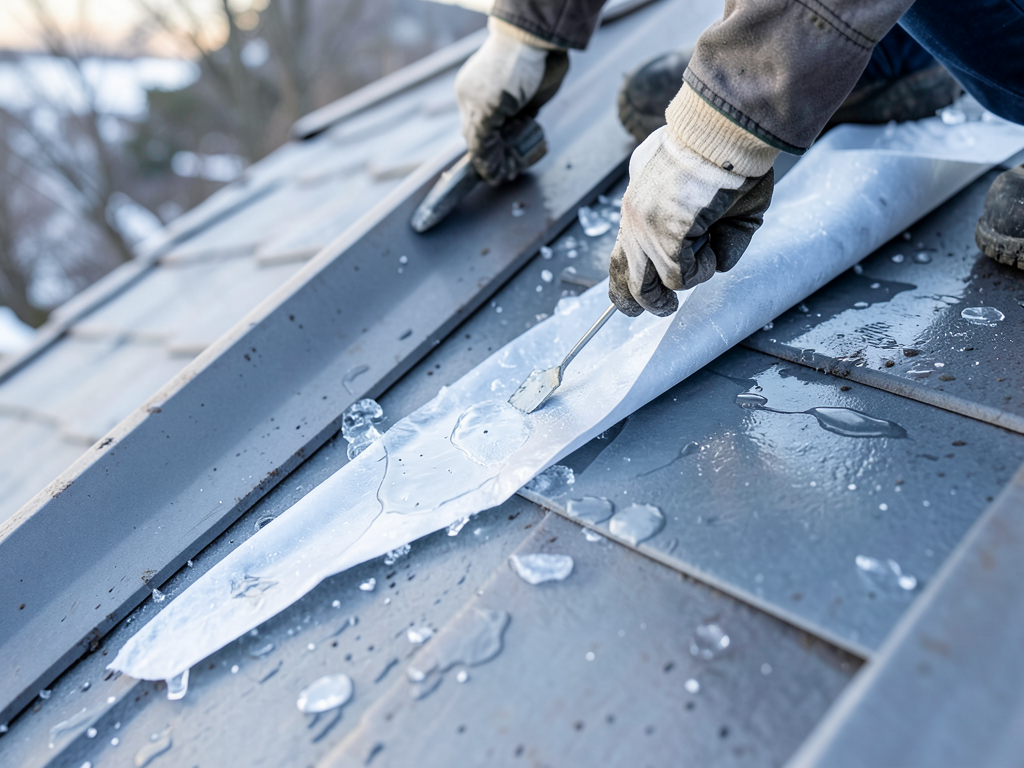
Image: Close-up of ice and water shield being installed at a Pittsburgh roof valley, showing the peel-and-stick application process.
Installation Best Practices for Pittsburgh Conditions
Temperature affects every underlayment choice. Felt becomes stiff below 40°F, making it difficult to lay flat. Synthetic installation works down to 20°F but requires care to prevent wrinkling. Ice and water shield needs surface temperatures above 40°F for proper adhesion.
Humidity impacts installation timing. Pittsburgh’s summer thunderstorms can roll in quickly, requiring crews to work faster with synthetic materials that shed water immediately. Felt absorbs moisture during extended exposure, potentially causing wrinkling that telegraphs through shingles.
Valley installation requires special attention. Pittsburgh’s many Victorian homes feature complex rooflines with intersecting gables. Ice and water shield in valleys prevents the most common leak point. Installers should overlap sheets by 6 inches and seal all edges with roofing cement. Why Metal Roofing is Becoming the Top Choice for Homes in North Hills.
Cost Considerations for Pittsburgh Homeowners
Material costs vary significantly. Fifteen-pound felt runs $15-20 per square, while premium synthetic costs $35-50 per square. Ice and water shield averages $75-100 per square for the material alone. Labor rates in Pittsburgh typically add $40-60 per square for underlayment installation.
The total cost difference between basic and premium systems ranges from $500-1,500 on an average Pittsburgh home. However, the premium systems often qualify for extended manufacturer warranties and prevent the costly water damage that Pittsburgh’s climate frequently causes.
Which Underlayment Should You Choose?
For Pittsburgh’s climate, the optimal system combines synthetic underlayment for the main roof area with ice and water shield in vulnerable zones. This hybrid approach balances cost with protection. Homes in Squirrel Hill or Shadyside with complex rooflines benefit most from premium systems due to the higher risk of leaks.
New construction in Wexford or Cranberry Township should specify synthetic underlayment throughout. The material’s longevity matches that of modern architectural shingles, typically 30+ years. For replacement roofs on Pittsburgh’s older housing stock, ice and water shield becomes essential in preventing the ice dam leaks that plague the region.
Budget-conscious homeowners can still achieve good protection with 30-pound felt and strategic ice and water shield placement. The key is proper installation technique and ensuring all code-required areas receive the premium membrane treatment.
Warning Signs Your Underlayment Has Failed
Water stains on ceilings often indicate underlayment failure. In Pittsburgh homes, these typically appear after heavy snow followed by rapid warming. The ice dam backs up under shingles, overwhelming compromised underlayment.
Attic mold growth signals trapped moisture, often from felt underlayment that has lost its permeability due to age or damage. Pittsburgh’s humid summers exacerbate this problem, creating the perfect conditions for mold spores to colonize roof decking.
Shingle curling at the edges suggests moisture migration from below. This happens when underlayment can no longer manage vapor transmission, forcing moisture into the shingle layer instead of allowing it to escape.
Maintenance and Inspection Tips
Annual roof inspections should include underlayment assessment. Look for exposed nail heads, tears in felt, or delamination in synthetic products. Pittsburgh’s severe weather means even premium systems need periodic checking.
Pay special attention to areas around chimneys and vent pipes. These penetrations create stress points where underlayment can separate from the deck. Ice and water shield should remain fully adhered in these locations.
After major storms, check for debris accumulation in valleys. Pittsburgh’s many trees mean leaves and branches often collect in roof valleys, holding moisture against underlayment and accelerating deterioration.
Frequently Asked Questions
How long does roof underlayment last in Pittsburgh?
Quality synthetic underlayment typically lasts 25-30 years, matching the lifespan of modern shingles. Felt underlayment generally needs replacement every 15-20 years due to degradation from Pittsburgh’s freeze-thaw cycles and UV exposure.
Can I install new underlayment over old felt?
No. Building codes require complete removal of existing underlayment before installing new roofing. Old felt often contains moisture and can create uneven surfaces that telegraph through new shingles. Roofing Scranton.
Is ice and water shield necessary for all Pittsburgh homes?
Yes, for eaves and valleys at minimum. Pittsburgh’s climate and building codes require ice and water shield in these areas to prevent ice dam damage. The membrane provides protection that standard underlayment cannot match in these vulnerable zones.
Professional Installation Matters
Underlayment installation requires experience specific to Pittsburgh’s conditions. Temperature, humidity, and roof pitch all affect how materials perform. A roofer familiar with Pittsburgh’s building codes knows exactly where ice and water shield must extend and how to properly overlap synthetic sheets.
DIY underlayment installation often leads to problems. Improper fastening, inadequate overlaps, and missed code requirements can void warranties and create leak points. Professional installation includes proper attic ventilation assessment, ensuring your underlayment system works with the entire roof assembly.
Call (878) 209-5522 today to schedule your inspection. Our Pittsburgh roofing experts will assess your current underlayment and recommend the right system for your home’s specific needs. Don’t wait until the next storm reveals weaknesses in your roof’s protection. Expert Slate Roof Repair Services for Sewickley Historic Properties.
Image: Technician performing a moisture scan on a Pittsburgh roof deck using thermal imaging to detect hidden water damage before underlayment installation.
Protect Your Pittsburgh Home with the Right Underlayment
Pittsburgh’s weather won’t wait for you to upgrade your roof protection. From the heavy snowfalls in North Hills to the humid summers in South Side, every neighborhood faces unique challenges. The right underlayment system prevents the water damage that costs Pittsburgh homeowners thousands annually.
Pick up the phone and call (878) 209-5522 before the next storm hits. Our team understands Pittsburgh’s specific building requirements and can recommend the perfect underlayment solution for your home. We’ve installed hundreds of roofs throughout the greater Pittsburgh area and know exactly what works in our climate.
Don’t let another winter’s ice dams or summer’s humidity compromise your home’s protection. Contact us now for a comprehensive roof evaluation and discover why Pittsburgh homeowners trust us with their most important investment.
You may also find this helpful. Wind-Resistant Roofing Options for High Elevations in Robinson Township.
{
“@context”: “https://schema.org”,
“@type”: “BlogPosting”,
“headline”: “Choosing the Right Roof Underlayment for the Wet and Humid Pittsburgh Climate”,
“description”: “Discover which roof underlayment performs best in Pittsburgh’s freeze-thaw cycles and heavy precipitation. Compare synthetics vs. felt with local building code insights.”,
“wordCount”: 1684,
“datePublished”: “2026-03-18T11:27:00.000Z”,
“dateModified”: “2026-03-18T11:27:00.000Z”,
“inLanguage”: “en-US”,
“mainEntityOfPage”: {
“@type”: “WebPage”,
“@id”: “https://victoryroofingpittsburgh.com”
},
“publisher”: {
“@type”: “LocalBusiness”,
“name”: “Victory Roofing Pittsburgh”,
“url”: “https://victoryroofingpittsburgh.com”
},
“author”: {
“@type”: “Organization”,
“name”: “Victory Roofing Pittsburgh”,
“url”: “https://victoryroofingpittsburgh.com”
},
“image”: {
“@type”: “ImageObject”,
“url”: “https://victoryroofingpittsburgh.com/wp-content/uploads/2026/03/choosing-the-right-roof-underlayment-for-the-wet-a-1.png”
}
}
{
“@context”: “https://schema.org”,
“@type”: “RoofingContractor”,
“name”: “Victory Roofing Pittsburgh”,
“url”: “https://victoryroofingpittsburgh.com”,
“address”: {
“@type”: “PostalAddress”,
“addressLocality”: “Pittsburgh”
},
“areaServed”: {
“@type”: “City”,
“name”: “Pittsburgh”
}
}
{
“@context”: “https://schema.org”,
“@type”: “FAQPage”,
“mainEntity”: [
{
“@type”: “Question”,
“name”: “Which Underlayment Should You Choose?”,
“acceptedAnswer”: {
“@type”: “Answer”,
“text”: “For Pittsburgh’s climate, the optimal system combines synthetic underlayment for the main roof area with ice and water shield in vulnerable zones. This hybrid approach balances cost with protection. Homes in Squirrel Hill or Shadyside with complex rooflines benefit most from premium systems due to the higher risk of leaks.”
}
},
{
“@type”: “Question”,
“name”: “How long does roof underlayment last in Pittsburgh?”,
“acceptedAnswer”: {
“@type”: “Answer”,
“text”: “Quality synthetic underlayment typically lasts 25-30 years, matching the lifespan of modern shingles. Felt underlayment generally needs replacement every 15-20 years due to degradation from Pittsburgh’s freeze-thaw cycles and UV exposure.”
}
},
{
“@type”: “Question”,
“name”: “Can I install new underlayment over old felt?”,
“acceptedAnswer”: {
“@type”: “Answer”,
“text”: “No. Building codes require complete removal of existing underlayment before installing new roofing. Old felt often contains moisture and can create uneven surfaces that telegraph through new shingles. Roofing Scranton.”
}
},
{
“@type”: “Question”,
“name”: “Is ice and water shield necessary for all Pittsburgh homes?”,
“acceptedAnswer”: {
“@type”: “Answer”,
“text”: “Yes, for eaves and valleys at minimum. Pittsburgh’s climate and building codes require ice and water shield in these areas to prevent ice dam damage. The membrane provides protection that standard underlayment cannot match in these vulnerable zones.”
}
}
]
}
{
“@context”: “https://schema.org”,
“@type”: “BreadcrumbList”,
“itemListElement”: [
{
“@type”: “ListItem”,
“position”: 1,
“name”: “Home”,
“item”: “https://victoryroofingpittsburgh.com”
},
{
“@type”: “ListItem”,
“position”: 2,
“name”: “Blog”,
“item”: “https://victoryroofingpittsburgh.com/blog”
},
{
“@type”: “ListItem”,
“position”: 3,
“name”: “Choosing the Right Roof Underlayment for the Wet and Humid Pittsburgh Climate”
}
]
}
{
“@context”: “https://schema.org”,
“@type”: “Service”,
“serviceType”: “Roofing”,
“provider”: {
“@type”: “LocalBusiness”,
“name”: “Victory Roofing Pittsburgh”,
“url”: “https://victoryroofingpittsburgh.com”
},
“areaServed”: {
“@type”: “City”,
“name”: “Pittsburgh”
},
“description”: “Discover which roof underlayment performs best in Pittsburgh’s freeze-thaw cycles and heavy precipitation. Compare synthetics vs. felt with local building code insights.”
}