
Connecting Rain Barrels to Your Gutter System for Sustainable Gardening in the East End
Pittsburgh’s East End neighborhoods like Squirrel Hill and Shadyside receive approximately 38 inches of rainfall annually. That water currently flows off your roof into gutters and downspouts, rushing directly into the city’s combined sewer system. By installing rain barrels connected to your existing gutter system, you can capture thousands of gallons of free water each year for your garden while reducing strain on Pittsburgh’s aging infrastructure. Commercial Gutter Systems.
Every 1,000 square feet of roof surface collects about 600 gallons of water from just one inch of rainfall. For a typical East End home with a 1,500 square foot roof, that’s nearly 1,000 gallons from a single moderate storm. Rain barrels give you control over this resource, turning potential stormwater runoff into a sustainable water supply for your plants and garden.
Why Pittsburgh Homeowners Need Rain Water Harvesting
The East End sits within Pittsburgh’s combined sewer system, where stormwater and sanitary sewage flow through the same pipes. During heavy rains, this system overflows into local waterways, causing environmental damage. Rain barrels help by keeping water on your property where it can slowly infiltrate into the ground.
Beyond environmental benefits, rainwater is better for plants than chlorinated tap water. It’s naturally soft, slightly acidic, and contains dissolved nitrogen that plants love. Your garden will thrive with rainwater, and you’ll see lower water bills during the growing season.
East End homes often feature mature trees and established gardens that require consistent watering. Rain barrels provide a reliable water source during summer months when municipal water restrictions might apply. The system works year-round, though winter requires specific preparation. EPA green infrastructure guidelines.
Solving Stormwater Runoff and Sewer Overflow in Allegheny County
Allegheny County’s aging infrastructure struggles with stormwater management. The PWSA reports that combined sewer overflows discharge millions of gallons of untreated water into rivers annually. Each rain barrel installation helps reduce this volume, with a single 55-gallon barrel preventing that amount from entering the system.
East End neighborhoods like Point Breeze and Regent Square have older homes with mature tree cover. These properties often have complex roof lines with multiple downspouts. Connecting rain barrels to just two downspouts can capture significant water volume while maintaining proper drainage for the rest of your property.
The Pittsburgh Water and Sewer Authority offers rebates for stormwater management projects. Homeowners can receive up to $2,000 for installing rain barrels, rain gardens, or other water retention systems. This incentive makes rain barrel installation an even smarter investment for East End residents.
Our Rain Barrel Installation Process for Local Roofs
Professional installation ensures your rain barrel system functions properly and protects your home’s foundation. We start by evaluating your roof’s drainage patterns and identifying the best downspout locations for barrel placement. East End homes often have brick or stone foundations that require careful consideration for water management.
The installation process includes modifying your existing downspout to direct water into the barrel. We install a diverter system that allows overflow to continue through the downspout when the barrel is full. This prevents water from backing up and causing foundation issues.
We level the ground where the barrel sits and often install a concrete pad to prevent settling. Proper elevation allows you to use gravity for watering, eliminating the need for pumps in most garden applications. The entire system integrates seamlessly with your existing gutter configuration.
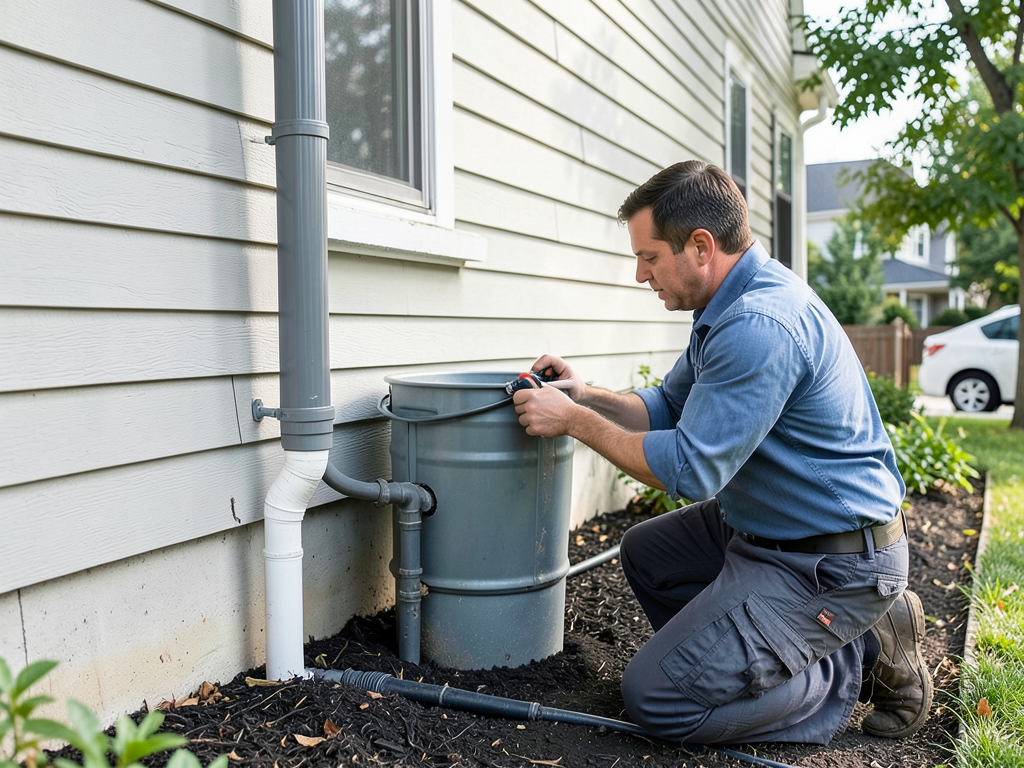
Diagram showing proper rain barrel placement and downspout diverter installation for a typical East End home with multiple roof planes.
Downspout Diverters and Gutter Integration
Downspout diverters are the heart of any rain barrel system. These devices fit into your existing downspout and direct water into the barrel when it’s available. When the barrel fills, the diverter automatically sends excess water back through the downspout to your drainage system.
For East End homes, we often recommend first-flush diverters. These systems capture the initial runoff from your roof, which contains the most debris and contaminants. The cleaner water then flows into your barrel, keeping your stored water fresh for garden use.
Gutter guards are essential for rain barrel systems. They prevent leaves and debris from entering the diverter and clogging the system. East End neighborhoods have many mature trees, making gutter protection particularly important for maintaining your rain barrel’s efficiency.
Local Regulations and PWSA Rebate Information
Allegheny County requires permits for certain stormwater management modifications. Rain barrel installations typically fall under minor home improvement permits, which we handle as part of our service. The PWSA’s stormwater management program provides specific guidelines for rain barrel placement and overflow management. Homeowner’s Guide to Roofing.
The PWSA offers the Household Rainwater Reuse Rebate program, providing up to $2 per gallon of storage capacity, with a maximum rebate of $2,000. This covers the cost of multiple rain barrels and professional installation for most East End properties.
Property owners must ensure rain barrels don’t create standing water that could attract mosquitoes. We install all systems with proper overflow management and often include fine mesh screens on all openings. These screens keep out debris while preventing mosquito access to standing water.
Choosing the Right Rain Barrel for Your Pittsburgh Home
Rain barrels come in various materials and capacities. For East End homes, we typically recommend food-grade polyethylene barrels that resist UV damage and won’t crack in winter. A 55-gallon barrel is standard, but multiple barrels can be linked together for increased capacity.
Consider your garden’s water needs when selecting barrel size. A typical vegetable garden requires about 1 inch of water per week. For a 100 square foot garden, that’s approximately 60 gallons weekly during peak growing season. Two linked 55-gallon barrels often provide sufficient capacity for most East End gardens.
East End homes often have historic or architectural significance. We offer decorative rain barrels that complement your home’s aesthetic while providing the same functionality as standard models. These barrels come in various colors and styles to match your property’s character.
Maintenance and Winterizing Your System for PA Winters
Pennsylvania winters require specific preparation for rain barrel systems. Water expands when it freezes, which can crack barrels and damage diverters. We recommend draining your system by November and storing barrels upside down in a protected area.
Before winterizing, clean your gutters and diverters to prevent debris buildup. Remove any fine mesh screens and store them indoors. If you choose to leave barrels in place, ensure they’re completely empty and consider installing winterizing caps over the diverter openings.
Spring maintenance involves checking for winter damage, cleaning the barrel interior, and inspecting diverter functionality. We recommend testing the entire system before the spring rains begin to ensure everything functions properly for the growing season.. Read more about Managing Shared Roof Maintenance with Your Neighbors in Garfield Row Houses.
Technician installing a downspout diverter and rain barrel system on a historic East End home, showing proper leveling and overflow management.
Frequently Asked Questions
How much water can I collect with rain barrels?
A 1,000 square foot roof collects about 600 gallons from one inch of rainfall. With Pittsburgh’s average 38 inches of annual rainfall, a typical East End home can collect over 20,000 gallons yearly. Even a single 55-gallon barrel captures significant water during spring and summer storms.
Will rain barrels attract mosquitoes?
Properly installed rain barrels with fine mesh screens don’t attract mosquitoes. The screens prevent adult mosquitoes from accessing the water to lay eggs. Additionally, the constant inflow and outflow of water during rain events prevents the standing water conditions mosquitoes need for breeding.
Can I drink the rainwater from my barrels?
Rainwater collected from roofs is not potable and should only be used for irrigation and outdoor purposes. Roof surfaces collect bird droppings, pollen, and other contaminants that make the water unsafe for drinking. The water is perfect for gardens but not for human consumption.
How do I connect multiple rain barrels?
Multiple barrels connect using linking kits that allow water to flow between them. This creates a single storage system where all barrels fill and drain together. Linking is ideal for larger gardens or properties with multiple downspouts, maximizing your water collection capacity.
What happens when the barrel overflows?
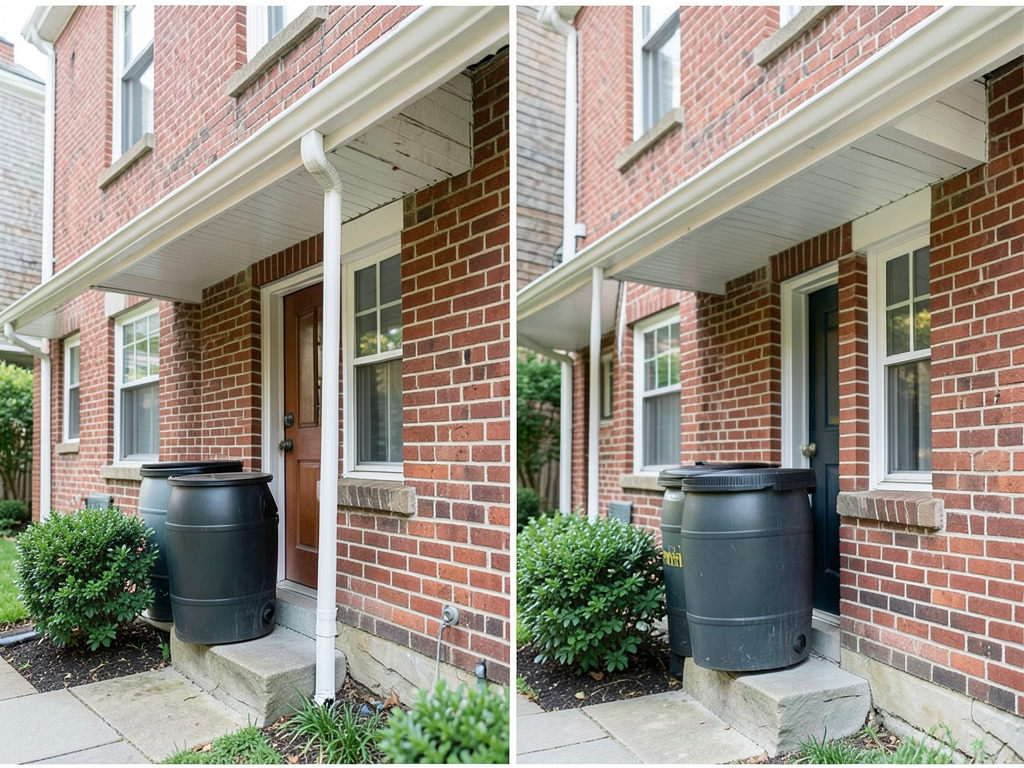
Quality diverter systems automatically redirect overflow back through your existing downspout when barrels reach capacity. This prevents water from pooling around your foundation and ensures proper drainage continues even when your barrels are full. The system functions as an extension of your current gutter setup.
Before and after installation showing how rain barrels integrate with existing gutter systems while maintaining proper drainage and foundation protection.
Cost Savings and Environmental Impact
Rain barrels provide both financial and environmental benefits. A typical East End household can save $50-$100 annually on water bills by using collected rainwater for garden irrigation. Over a 10-year period, this adds up to $500-$1,000 in savings, not including the PWSA rebate that can cover installation costs.
Environmentally, each rain barrel installation helps reduce combined sewer overflows in Pittsburgh’s waterways. The East End’s contribution to this problem is significant due to the age of the infrastructure and the density of older homes. Every installation makes a measurable difference in water quality in the Allegheny River and local streams.
Rainwater harvesting also reduces demand on municipal water treatment facilities. By using natural water for irrigation, you’re helping conserve the energy and chemicals used to treat and pump drinking water throughout the city.
Professional Installation vs. DIY
While DIY rain barrel kits exist, professional installation ensures proper integration with your existing gutter system. We understand Pittsburgh’s specific building codes, soil conditions, and drainage requirements. Our installations include proper overflow management, foundation protection, and integration with your home’s existing drainage patterns.
Professional installation also includes warranty coverage and proper winterization preparation. We stand behind our work and ensure your system functions correctly through Pittsburgh’s freeze-thaw cycles and heavy spring rains. DIY installations often miss critical details that can lead to foundation damage or system failure.
Time is another factor. Professional installation typically takes 2-4 hours versus a full weekend for most DIY projects. We handle all permitting requirements and can often complete the installation within a week of your initial call.
Getting Started with Rain Barrel Installation
The first step is scheduling a site evaluation. We assess your roof’s drainage patterns, identify optimal downspout locations, and determine the best barrel configuration for your property. East End homes have unique characteristics that require experienced evaluation to maximize water collection while protecting your foundation.
During the evaluation, we also check your existing gutters for proper function. If your gutters need repair or cleaning, we can address those issues during the same visit. Clean, properly functioning gutters are essential for efficient rain barrel operation.
Most installations can be completed within one week of your evaluation. We provide a detailed proposal showing the recommended system configuration, expected water collection capacity, and total project cost including any applicable PWSA rebates.
Call (878) 209-5522 Today to Schedule Your Rain Barrel Installation
Don’t let thousands of gallons of free water flow off your roof and into the sewer system. Call (878) 209-5522 today to schedule your rain barrel installation. Our experienced team understands Pittsburgh’s unique climate and building requirements, ensuring your system works efficiently for years to come.
East End homeowners who install rain barrels help reduce stormwater runoff, save money on water bills, and provide better water for their gardens. Call (878) 209-5522 now to take advantage of PWSA rebates and start collecting free rainwater from your roof. Your garden and the environment will thank you.
{
“@context”: “https://schema.org”,
“@type”: “BlogPosting”,
“headline”: “Connecting Rain Barrels to Your Gutter System for Sustainable Gardening in the East End”,
“description”: “Learn how to install rain barrels in Pittsburgh’s East End. Reduce stormwater runoff, save on water bills, and help prevent sewer overflow. Call (878) 209-5522 for expert installation.”,
“wordCount”: 1910,
“datePublished”: “2026-06-05T06:29:00.000Z”,
“dateModified”: “2026-06-05T06:29:00.000Z”,
“inLanguage”: “en-US”,
“mainEntityOfPage”: {
“@type”: “WebPage”,
“@id”: “https://victoryroofingpittsburgh.com”
},
“publisher”: {
“@type”: “LocalBusiness”,
“name”: “Victory Roofing Pittsburgh”,
“url”: “https://victoryroofingpittsburgh.com”
},
“author”: {
“@type”: “Organization”,
“name”: “Victory Roofing Pittsburgh”,
“url”: “https://victoryroofingpittsburgh.com”
},
“image”: {
“@type”: “ImageObject”,
“url”: “https://victoryroofingpittsburgh.com/wp-content/uploads/2026/03/connecting-rain-barrels-to-your-gutter-system-for-1.png”
}
}
{
“@context”: “https://schema.org”,
“@type”: “RoofingContractor”,
“name”: “Victory Roofing Pittsburgh”,
“url”: “https://victoryroofingpittsburgh.com”,
“address”: {
“@type”: “PostalAddress”,
“addressLocality”: “Pittsburgh”
},
“areaServed”: {
“@type”: “City”,
“name”: “Pittsburgh”
}
}
{
“@context”: “https://schema.org”,
“@type”: “FAQPage”,
“mainEntity”: [
{
“@type”: “Question”,
“name”: “How much water can I collect with rain barrels?”,
“acceptedAnswer”: {
“@type”: “Answer”,
“text”: “A 1,000 square foot roof collects about 600 gallons from one inch of rainfall. With Pittsburgh’s average 38 inches of annual rainfall, a typical East End home can collect over 20,000 gallons yearly. Even a single 55-gallon barrel captures significant water during spring and summer storms.”
}
},
{
“@type”: “Question”,
“name”: “Will rain barrels attract mosquitoes?”,
“acceptedAnswer”: {
“@type”: “Answer”,
“text”: “Properly installed rain barrels with fine mesh screens don’t attract mosquitoes. The screens prevent adult mosquitoes from accessing the water to lay eggs. Additionally, the constant inflow and outflow of water during rain events prevents the standing water conditions mosquitoes need for breeding.”
}
},
{
“@type”: “Question”,
“name”: “Can I drink the rainwater from my barrels?”,
“acceptedAnswer”: {
“@type”: “Answer”,
“text”: “Rainwater collected from roofs is not potable and should only be used for irrigation and outdoor purposes. Roof surfaces collect bird droppings, pollen, and other contaminants that make the water unsafe for drinking. The water is perfect for gardens but not for human consumption.”
}
},
{
“@type”: “Question”,
“name”: “How do I connect multiple rain barrels?”,
“acceptedAnswer”: {
“@type”: “Answer”,
“text”: “Multiple barrels connect using linking kits that allow water to flow between them. This creates a single storage system where all barrels fill and drain together. Linking is ideal for larger gardens or properties with multiple downspouts, maximizing your water collection capacity.”
}
},
{
“@type”: “Question”,
“name”: “What happens when the barrel overflows?”,
“acceptedAnswer”: {
“@type”: “Answer”,
“text”: “Quality diverter systems automatically redirect overflow back through your existing downspout when barrels reach capacity. This prevents water from pooling around your foundation and ensures proper drainage continues even when your barrels are full. The system functions as an extension of your current gutter setup.”
}
}
]
}
{
“@context”: “https://schema.org”,
“@type”: “BreadcrumbList”,
“itemListElement”: [
{
“@type”: “ListItem”,
“position”: 1,
“name”: “Home”,
“item”: “https://victoryroofingpittsburgh.com”
},
{
“@type”: “ListItem”,
“position”: 2,
“name”: “Blog”,
“item”: “https://victoryroofingpittsburgh.com/blog”
},
{
“@type”: “ListItem”,
“position”: 3,
“name”: “Connecting Rain Barrels to Your Gutter System for Sustainable Gardening in the East End”
}
]
}
{
“@context”: “https://schema.org”,
“@type”: “Service”,
“serviceType”: “Roofing”,
“provider”: {
“@type”: “LocalBusiness”,
“name”: “Victory Roofing Pittsburgh”,
“url”: “https://victoryroofingpittsburgh.com”
},
“areaServed”: {
“@type”: “City”,
“name”: “Pittsburgh”
},
“description”: “Learn how to install rain barrels in Pittsburgh’s East End. Reduce stormwater runoff, save on water bills, and help prevent sewer overflow. Call (878) 209-5522 for expert installation.”
}