Navigating HARB Approval for New Roofs in the Mexican War Streets Historic District
Replacing a roof in Pittsburgh’s Mexican War Streets Historic District requires navigating the Historic Architectural Review Board (HARB) approval process. This guide walks you through the specific requirements, approved materials, and permit steps to ensure your project meets historic preservation standards while protecting your investment. Pittsburgh Historic Review Commission.
Understanding HARB’s Role in the Mexican War Streets
The Mexican War Streets, listed on the National Register of Historic Places since 1975, sits within Pittsburgh’s North Side Historic District. Any exterior modification visible from a public right-of-way requires HARB review under Pittsburgh’s Historic Review Ordinance (Pittsburgh Code Chapter 30). The board evaluates whether proposed changes maintain the historic character of this 19th-century neighborhood.
HARB approval is mandatory before obtaining a building permit from the Department of Permits, Licenses, and Inspections (PLI). Without it, you risk fines, forced removal of non-compliant work, and potential legal action. The process typically takes 4-6 weeks from application to decision.
Approved Roofing Materials for Historic Compliance
HARB maintains strict material standards to preserve the architectural integrity of the Mexican War Streets. The board favors materials that match or closely resemble those used during the neighborhood’s development period (1860s-1910s).
Natural Slate vs. Synthetic Alternatives
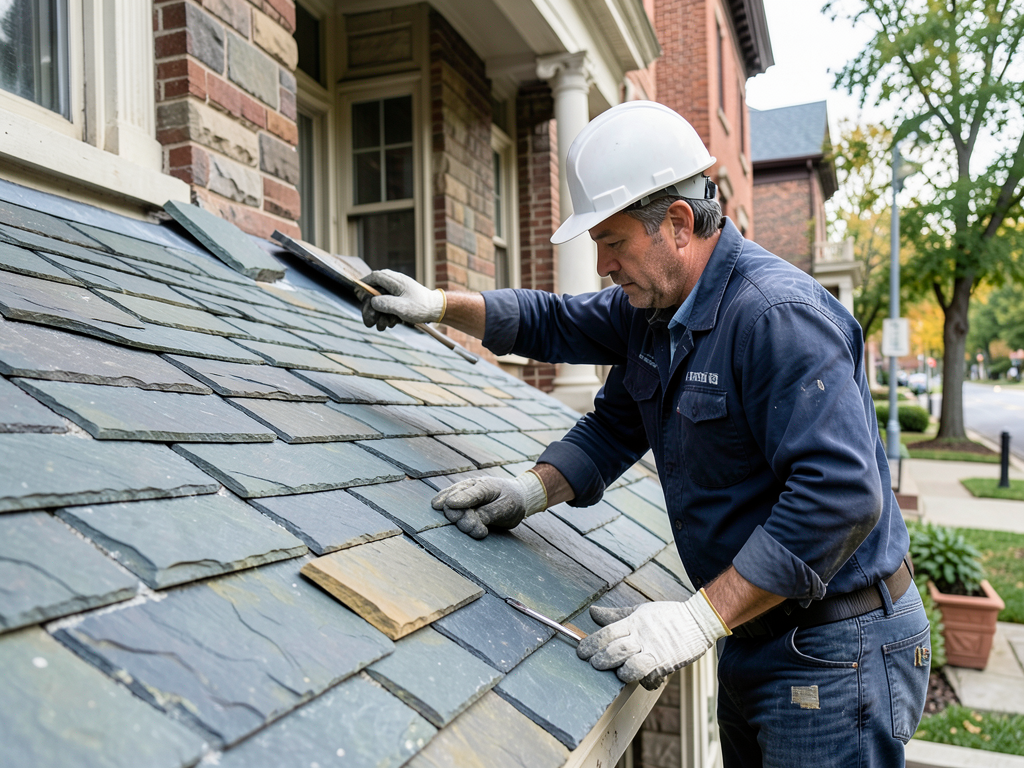
Natural slate remains the gold standard for historic districts. The Pennsylvania State Historic Preservation Office recommends Vermont unfading black slate for its durability and authentic appearance. A standard 1/4-inch thick slate costs approximately $1,200-1,800 per square installed. Pennsylvania State Historic Preservation Office.
Synthetic slate options like DaVinci or CertainTeed’s Belmont provide a cost-effective alternative at $600-900 per square. These materials must be approved by HARB as matching the visual characteristics of natural slate. The key is selecting products with the same color variation, thickness, and texture as the original materials. Expert Slate Roof Repair Services for Sewickley Historic Properties.
Standing Seam Metal and Tin Roofs
Standing seam metal roofs work well for flat-roofed Victorian homes common in the Mexican War Streets. HARB typically requires 24-gauge galvanized steel with a Kynar 500 finish in colors that complement the historic palette. Popular choices include dark bronze, charcoal, and forest green. Why Metal Roofing is Becoming the Top Choice for Homes in North Hills.
Tin roofs, while less common today, remain historically accurate for certain architectural styles. Modern tin-coated steel provides the same aesthetic with improved longevity compared to traditional terne metal.
Copper Gutters and Flashing Requirements
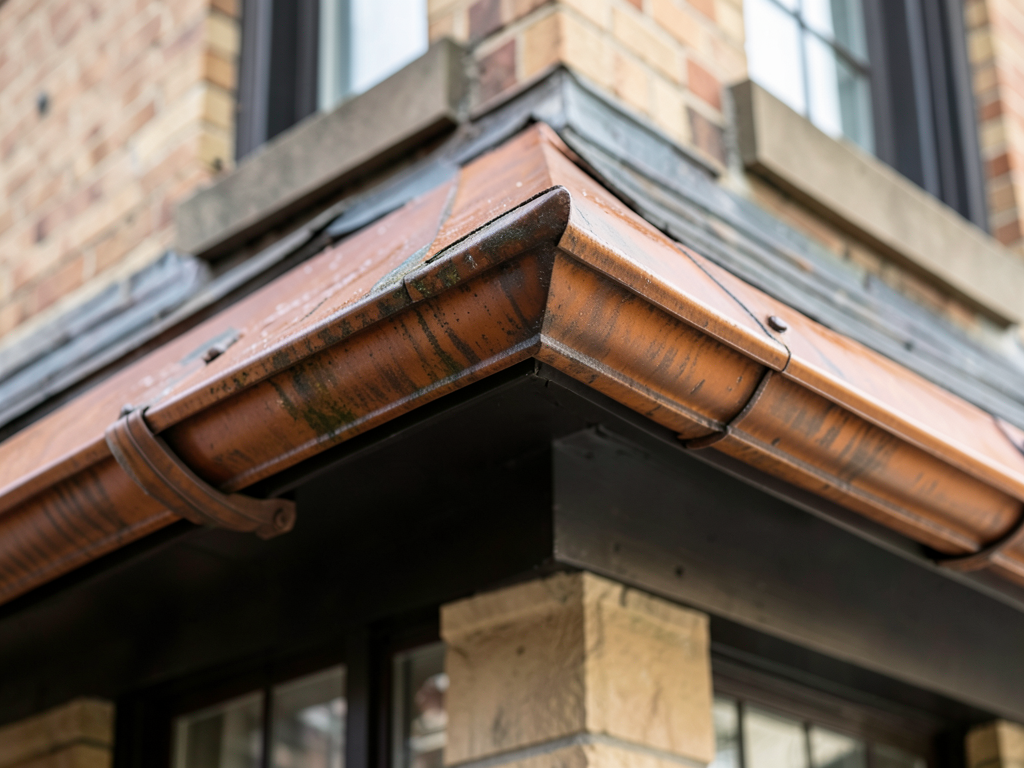
Copper components are often required or strongly encouraged by HARB. 16-ounce copper gutters and downspouts develop a natural patina that blends with historic architecture. The material costs more upfront ($15-20 per linear foot) but lasts 50+ years. Commercial Gutter Systems.
Lead-coated copper flashing provides superior weatherproofing around chimneys, valleys, and roof penetrations. This material costs approximately 20% more than standard copper but offers better corrosion resistance in Pittsburgh’s freeze-thaw climate.
Flat Roof Membranes for Hidden Areas
For flat or low-slope sections not visible from the street, HARB may approve modern materials like TPO or EPDM. These synthetic membranes provide excellent waterproofing at $400-600 per square. The key is ensuring these areas remain completely hidden from public view.
Modified bitumen offers another option for low-slope applications, particularly on porches or additions. This material costs $450-550 per square and provides good durability in Pittsburgh’s climate.
The Permit and Approval Process
Securing HARB approval requires careful preparation and understanding of the submission requirements. The process begins with a pre-application meeting at the City-County Building.
Step-by-Step Certificate of Appropriateness Application
The Certificate of Appropriateness (COA) application requires:
- Pre-Application Conference
Schedule a meeting with HARB staff to discuss your project scope and receive preliminary feedback on material choices.
- Complete Application Forms
Submit the official COA application along with site plans, roof plans, and material specifications.
- Provide Documentation
Include photos of existing conditions, material samples, and manufacturer specifications for all proposed materials.
- Pay Application Fees
HARB fees range from $200-500 depending on project scope, plus $100-200 for HARB staff review time.
- Attend HARB Hearing
Present your project to the board, typically meeting on the first and third Tuesdays of each month.
- Receive Decision
HARB decisions are rendered within 10 business days of the hearing.
- Obtain Building Permit
Once approved, submit your COA to PLI for building permit issuance.
Typical HARB hearing schedules run 2-3 months out, so plan accordingly. Emergency repairs may qualify for expedited review, but this requires documentation of immediate safety concerns.
Required Documentation for HARB Submission
Your application package must include:
- Completed COA application form
- Site plan showing property boundaries and existing structures
- Roof plan with dimensions and pitch calculations
- Material samples or color chips for all visible components
- Manufacturer specifications and warranty information
- Photos of existing roof conditions from multiple angles
- Statement explaining how your proposal maintains historic character
Missing documentation is the most common reason for application delays or denials. Double-check your package before submission.
Common Violations to Avoid
Understanding what HARB typically rejects helps you avoid costly mistakes. The board consistently denies proposals that alter the historic character of buildings.
Asphalt shingles on visible slopes represent the most frequent violation. Even high-quality architectural shingles appear out of place on 1880s Italianate or Second Empire homes. HARB requires materials that match the original construction period.. Read more about Why Solar Shingles Might Be a Better Look for Your Point Breeze Historic Home than Panels.
Unauthorized color changes also trigger denials. Bright white, light gray, or unusual colors rarely receive approval in historic districts. HARB prefers earth tones and colors documented in historic paint studies of the neighborhood.
Improper flashing materials constitute another common issue. Aluminum or vinyl flashing lacks the durability and historic accuracy of copper or lead-coated copper. HARB may approve these materials only if completely hidden from view.
Adding skylights without proper framing often violates historic preservation standards. HARB typically requires custom-fabricated copper or lead-coated copper cricket frames to maintain architectural integrity around roof penetrations.
Why Local Expertise Matters for MWS Roofing
Navigating HARB approval requires knowledge of Pittsburgh’s specific historic preservation standards and building codes. Local contractors understand the nuances that can make or break your approval.
The City of Pittsburgh’s Historic Review Commission maintains neighborhood-specific design guidelines for the Mexican War Streets. These documents outline acceptable materials, colors, and design elements based on architectural surveys of the district. Homeowner’s Guide to Roofing.
Local contractors also understand Pittsburgh’s unique climate challenges. The freeze-thaw cycles common to Western Pennsylvania require specific installation techniques for slate and metal roofing. Improper installation can lead to premature failure regardless of material quality.
Building code compliance adds another layer of complexity. Pittsburgh’s PLI enforces specific requirements for ice and water shield installation, ventilation, and structural loading that must be integrated with HARB’s historic preservation standards.
Experience with similar projects in the Mexican War Streets proves invaluable. Contractors familiar with the neighborhood understand which proposals succeed and which face resistance from HARB. This knowledge helps you make informed decisions about material selection and project scope.
Cost Factors and Timeline Considerations
Historic district roofing projects typically cost 30-50% more than standard replacements due to material requirements and approval processes. A typical 2,000-square-foot home might require $15,000-25,000 for a HARB-compliant roof versus $8,000-12,000 for a non-historic replacement. How Much a Full Roof Replacement Actually Costs in Pittsburgh Right Now.
Material costs drive much of this difference. Natural slate costs $1,200-1,800 per square installed compared to $300-500 for asphalt shingles. Copper components add $2,000-5,000 to most projects.
Timeline considerations extend beyond installation. The HARB process adds 2-4 months to most projects. Factor in pre-application meetings, documentation preparation, hearing scheduling, and permit issuance when planning your replacement.
Weather constraints affect scheduling in Pittsburgh. Slate and copper installation requires specific temperature ranges. Most contractors avoid installation when temperatures fall below 40°F or exceed 90°F to ensure proper adhesion and sealing.
Insurance considerations matter for historic properties. Some carriers offer premium discounts for HARB-approved materials due to their superior durability and fire resistance. Check with your insurance provider about potential savings.
Working with Your Contractor
Selecting the right contractor proves crucial for historic district projects. Look for companies with specific experience in HARB approvals and historic preservation work.
Ask potential contractors about their experience with Mexican War Streets projects. Request references from similar historic district work and verify their understanding of HARB requirements.
Ensure your contractor carries proper insurance and licensing for work in Pittsburgh’s historic districts. Some municipalities require additional coverage for projects involving historic properties.
Communication throughout the process prevents misunderstandings. Your contractor should explain HARB requirements, material options, and potential challenges before work begins. Clear expectations help avoid costly changes mid-project.
Quality control matters more in historic districts. Insist on manufacturers’ representatives or certified installers for specialized materials like slate or copper. Proper installation ensures both HARB approval and long-term performance.
Maintaining Your Historic Roof
Once approved and installed, your historic roof requires specific maintenance to preserve both its function and appearance. Regular inspections catch problems before they cause significant damage.
Schedule professional inspections annually, preferably in spring after winter weather. Look for cracked or missing slate, loose flashing, and signs of water infiltration around chimneys and valleys.
Clean gutters and downspouts seasonally to prevent ice dam formation. Pittsburgh’s freeze-thaw cycles can damage historic materials if water cannot drain properly.
Address repairs promptly using matching materials. HARB requires repairs to maintain visual consistency with the original installation. Keep records of all maintenance and repairs for future reference.
Consider professional cleaning every 5-7 years for copper components. While the natural patina develops over time, accumulated debris can cause uneven weathering or corrosion.
Resources for Homeowners
Several resources help homeowners navigate HARB approval and historic preservation. The Pittsburgh History and Landmarks Foundation offers educational programs and technical assistance for historic property owners.
The Pennsylvania Historical and Museum Commission provides statewide guidance on historic preservation standards and best practices. Their technical briefs cover specific topics like slate roofing and copper work.
Local preservation groups often maintain lists of contractors experienced in historic district work. These referrals can save time and frustration in finding qualified professionals.
Online resources include the City of Pittsburgh’s Historic Review Commission website, which posts meeting agendas, application forms, and design guidelines. The National Park Service also offers technical preservation briefs covering various building materials and systems.
Frequently Asked Questions
How long does HARB approval typically take?
The complete HARB process usually requires 4-6 weeks from application submission to decision. Factor in additional time for pre-application meetings and documentation preparation. Emergency repairs may qualify for expedited review.
Can I use asphalt shingles on my roof in the Mexican War Streets?
HARB rarely approves asphalt shingles on visible roof slopes in historic districts. The board requires materials that match the original construction period, typically natural slate, standing seam metal, or appropriate synthetic alternatives that closely resemble historic materials.
What happens if I proceed without HARB approval?
Working without required HARB approval can result in fines, stop-work orders, and mandatory removal of non-compliant materials. You may also face difficulties selling your property if unauthorized changes are discovered during title searches or inspections.
Do I need separate permits from PLI?
Yes, you need both HARB approval and a building permit from PLI. HARB provides the Certificate of Appropriateness, which you submit to PLI for the building permit. Both approvals are required before starting work.
How much do HARB fees cost?
HARB application fees range from $200-500 depending on project scope, plus $100-200 for staff review time. These fees are separate from building permit fees charged by PLI and contractor costs.
Ready to Start Your HARB-Approved Roofing Project?
Call (878) 209-5522 today to schedule your HARB consultation. Our team has successfully navigated the approval process for dozens of Mexican War Streets homeowners. Don’t risk fines or delays – work with experienced professionals who understand Pittsburgh’s historic preservation requirements.
Pick up the phone and call (878) 209-5522 before the next storm hits. We’ll help you select the right materials, prepare your application, and ensure your project meets all HARB and building code requirements.
{
“@context”: “https://schema.org”,
“@type”: “BlogPosting”,
“headline”: “Navigating HARB Approval for New Roofs in the Mexican War Streets Historic District”,
“description”: “Learn the step-by-step process for getting HARB approval for your new roof in Pittsburgh’s Mexican War Streets. Understand historic materials, permits, and compliance requirements.”,
“wordCount”: 1983,
“datePublished”: “2026-05-02T11:36:00.000Z”,
“dateModified”: “2026-05-02T11:36:00.000Z”,
“inLanguage”: “en-US”,
“mainEntityOfPage”: {
“@type”: “WebPage”,
“@id”: “https://victoryroofingpittsburgh.com”
},
“publisher”: {
“@type”: “LocalBusiness”,
“name”: “Victory Roofing Pittsburgh”,
“url”: “https://victoryroofingpittsburgh.com”
},
“author”: {
“@type”: “Organization”,
“name”: “Victory Roofing Pittsburgh”,
“url”: “https://victoryroofingpittsburgh.com”
},
“image”: {
“@type”: “ImageObject”,
“url”: “https://victoryroofingpittsburgh.com/wp-content/uploads/2026/03/navigating-harb-approval-for-new-roofs-in-the-mexi-1.png”
}
}
{
“@context”: “https://schema.org”,
“@type”: “RoofingContractor”,
“name”: “Victory Roofing Pittsburgh”,
“url”: “https://victoryroofingpittsburgh.com”,
“address”: {
“@type”: “PostalAddress”,
“addressLocality”: “Pittsburgh”
},
“areaServed”: {
“@type”: “City”,
“name”: “Pittsburgh”
}
}
{
“@context”: “https://schema.org”,
“@type”: “FAQPage”,
“mainEntity”: [
{
“@type”: “Question”,
“name”: “How long does HARB approval typically take?”,
“acceptedAnswer”: {
“@type”: “Answer”,
“text”: “The complete HARB process usually requires 4-6 weeks from application submission to decision. Factor in additional time for pre-application meetings and documentation preparation. Emergency repairs may qualify for expedited review.”
}
},
{
“@type”: “Question”,
“name”: “Can I use asphalt shingles on my roof in the Mexican War Streets?”,
“acceptedAnswer”: {
“@type”: “Answer”,
“text”: “HARB rarely approves asphalt shingles on visible roof slopes in historic districts. The board requires materials that match the original construction period, typically natural slate, standing seam metal, or appropriate synthetic alternatives that closely resemble historic materials.”
}
},
{
“@type”: “Question”,
“name”: “What happens if I proceed without HARB approval?”,
“acceptedAnswer”: {
“@type”: “Answer”,
“text”: “Working without required HARB approval can result in fines, stop-work orders, and mandatory removal of non-compliant materials. You may also face difficulties selling your property if unauthorized changes are discovered during title searches or inspections.”
}
},
{
“@type”: “Question”,
“name”: “Do I need separate permits from PLI?”,
“acceptedAnswer”: {
“@type”: “Answer”,
“text”: “Yes, you need both HARB approval and a building permit from PLI. HARB provides the Certificate of Appropriateness, which you submit to PLI for the building permit. Both approvals are required before starting work.”
}
},
{
“@type”: “Question”,
“name”: “How much do HARB fees cost?”,
“acceptedAnswer”: {
“@type”: “Answer”,
“text”: “HARB application fees range from $200-500 depending on project scope, plus $100-200 for staff review time. These fees are separate from building permit fees charged by PLI and contractor costs.”
}
},
{
“@type”: “Question”,
“name”: “Ready to Start Your HARB-Approved Roofing Project?”,
“acceptedAnswer”: {
“@type”: “Answer”,
“text”: “Call (878) 209-5522 today to schedule your HARB consultation. Our team has successfully navigated the approval process for dozens of Mexican War Streets homeowners. Don’t risk fines or delays – work with experienced professionals who understand Pittsburgh’s historic preservation requirements.”
}
}
]
}
{
“@context”: “https://schema.org”,
“@type”: “HowTo”,
“name”: “HARB Approval Process”,
“step”: [
{
“@type”: “HowToStep”,
“position”: 1,
“name”: “Pre-Application Conference”,
“text”: “Schedule a meeting with HARB staff to discuss your project scope and receive preliminary feedback on material choices.”
},
{
“@type”: “HowToStep”,
“position”: 2,
“name”: “Complete Application Forms”,
“text”: “Submit the official COA application along with site plans, roof plans, and material specifications.”
},
{
“@type”: “HowToStep”,
“position”: 3,
“name”: “Provide Documentation”,
“text”: “Include photos of existing conditions, material samples, and manufacturer specifications for all proposed materials.”
},
{
“@type”: “HowToStep”,
“position”: 4,
“name”: “Pay Application Fees”,
“text”: “HARB fees range from $200-500 depending on project scope, plus $100-200 for HARB staff review time.”
},
{
“@type”: “HowToStep”,
“position”: 5,
“name”: “Attend HARB Hearing”,
“text”: “Present your project to the board, typically meeting on the first and third Tuesdays of each month.”
},
{
“@type”: “HowToStep”,
“position”: 6,
“name”: “Receive Decision”,
“text”: “HARB decisions are rendered within 10 business days of the hearing.”
},
{
“@type”: “HowToStep”,
“position”: 7,
“name”: “Obtain Building Permit”,
“text”: “Once approved, submit your COA to PLI for building permit issuance.”
}
],
“image”: “https://victoryroofingpittsburgh.com/wp-content/uploads/2026/03/navigating-harb-approval-for-new-roofs-in-the-mexi-1.png”
}
{
“@context”: “https://schema.org”,
“@type”: “BreadcrumbList”,
“itemListElement”: [
{
“@type”: “ListItem”,
“position”: 1,
“name”: “Home”,
“item”: “https://victoryroofingpittsburgh.com”
},
{
“@type”: “ListItem”,
“position”: 2,
“name”: “Blog”,
“item”: “https://victoryroofingpittsburgh.com/blog”
},
{
“@type”: “ListItem”,
“position”: 3,
“name”: “Navigating HARB Approval for New Roofs in the Mexican War Streets Historic District”
}
]
}
{
“@context”: “https://schema.org”,
“@type”: “Service”,
“serviceType”: “Roofing”,
“provider”: {
“@type”: “LocalBusiness”,
“name”: “Victory Roofing Pittsburgh”,
“url”: “https://victoryroofingpittsburgh.com”
},
“areaServed”: {
“@type”: “City”,
“name”: “Pittsburgh”
},
“description”: “Learn the step-by-step process for getting HARB approval for your new roof in Pittsburgh’s Mexican War Streets. Understand historic materials, permits, and compliance requirements.”
}