
The Difference Between Normal Granule Loss and Major Storm Damage on Your Brookline Roof
Finding sand-like granules in your gutters can be alarming. You might wonder if your roof is failing or if a recent storm caused serious damage. The truth is that some granule loss is completely normal, while other types signal major problems that need immediate attention. Commercial Gutter Systems.
Asphalt shingles lose granules throughout their lifespan as part of the natural weathering process. However, severe granule loss from hail, high winds, or aging can leave your roof vulnerable to leaks and premature failure. Understanding the difference between normal wear and storm damage is crucial for protecting your home and avoiding unnecessary repairs. EPA energy efficiency guidelines.
This guide explains how to identify the type of granule loss affecting your Brookline roof, when to call a professional, and what factors specific to Pittsburgh’s climate might be accelerating the wear on your shingles. Homeowner’s Guide to Roofing.
Understanding Shingle Granules and Their Purpose
Shingle granules are small, ceramic-coated mineral particles embedded in the asphalt layer of your roofing shingles. These granules serve three critical functions: protecting the asphalt from UV radiation, providing fire resistance, and giving the roof its color and aesthetic appeal. Why Metal Roofing is Becoming the Top Choice for Homes in North Hills.
When shingles are manufactured, granules are embedded into the hot asphalt coating. Over time, some granules naturally dislodge and wash into your gutters. This process, called granule shedding, is most noticeable in the first few years after installation when loose granules from the manufacturing process come free.
Normal granule loss appears as a fine, consistent layer of sandy material in your gutters. You might notice this especially after heavy rains when water flushes loose particles from the roof surface. This type of loss does not create bald spots on your shingles and does not compromise the roof’s protective capabilities.
Normal Wear vs. Storm Damage: Key Differences
The pattern and location of granule loss reveal whether you’re dealing with normal aging or storm-related damage. Here’s how to tell the difference:
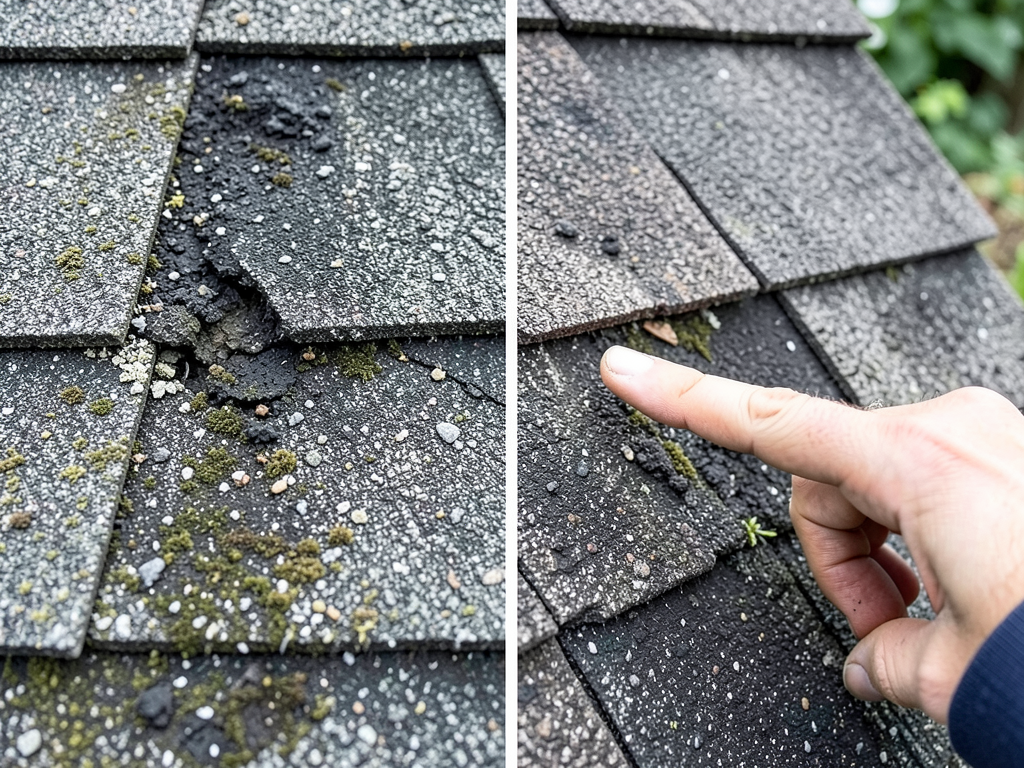
Normal wear shows up as uniform thinning across all shingles, with granules gradually washing away over many years. The loss is consistent from one area of the roof to another. You might see a light dusting of granules in gutters, but the shingle surfaces remain mostly covered with a uniform layer of protective granules.
Storm damage creates distinct patterns of concentrated loss. Hail damage often appears as circular or oval bare spots where hailstones struck the shingle surface. These spots feel slightly depressed compared to surrounding areas. Wind damage typically strips granules from the shingle edges or creates diagonal patterns across the roof where wind-driven rain hit at an angle.
Age-related granule loss in Brookline homes often accelerates due to Pittsburgh’s freeze-thaw cycles. Water seeps into tiny cracks in aging shingles, freezes and expands, then thaws. This repeated process gradually breaks the bond between granules and asphalt, causing more rapid loss than in milder climates.. Read more about How to Choose Between IKO and CertainTeed Shingles for Your Overbrook Home.
Common Causes of Accelerated Granule Loss in Pittsburgh
Several factors specific to the Brookline area and greater Pittsburgh region can cause your roof to lose granules faster than normal:
Hail damage is perhaps the most destructive cause of sudden granule loss. Pittsburgh experiences frequent severe thunderstorms during spring and summer months. Hailstones can knock granules completely off shingles, exposing the asphalt layer underneath. After a hailstorm, check for circular bare spots on shingles, especially on roof slopes facing the direction the storm came from.
Thermal shock from Pittsburgh’s dramatic temperature swings causes shingles to expand and contract. On a typical winter day, temperatures might swing from 20°F in the morning to 45°F by afternoon. This constant movement weakens the adhesive bond between granules and asphalt over time.
Algae and moss growth is common in Brookline’s tree-lined neighborhoods. These organisms trap moisture against shingle surfaces, accelerating granule deterioration. You might notice dark streaks or green patches on north-facing roof slopes where sunlight is limited.
Improper installation can cause premature granule loss. If shingles were nailed too tightly or if the roof deck was not properly prepared, granules may shed excessively within the first few years after installation.
Warning Signs That Require Professional Inspection
While some granule loss is normal, certain warning signs indicate you need a professional roofing inspection: Roofing Scranton.
Bare spots on shingles where the asphalt mat is clearly visible through missing granules. These areas appear as dark, irregular patches against the normal colored surface of your shingles.
Excessive granule accumulation in gutters and downspouts, enough to visibly change the color of drainage water after rain. While some granules are normal, large quantities suggest accelerated loss.
Cracked or curling shingles often accompany severe granule loss. As the protective granule layer wears away, the underlying asphalt becomes brittle and susceptible to cracking or curling at the edges.
Water stains on ceilings or walls inside your home indicate that granule loss has progressed to the point where water is penetrating the roof structure.
Age of your roof matters significantly. Most asphalt shingles in Pittsburgh last 20-25 years under normal conditions. If your roof is approaching this age and showing accelerated granule loss, replacement may be necessary soon.
The National Roofing Contractors Association (NRCA) recommends professional inspections after any severe weather event, especially hailstorms or winds exceeding 60 mph. A certified inspector can document damage that may be covered by insurance. National Roofing Contractors Association.
The Screwdriver Test: A Simple Diagnostic Tool
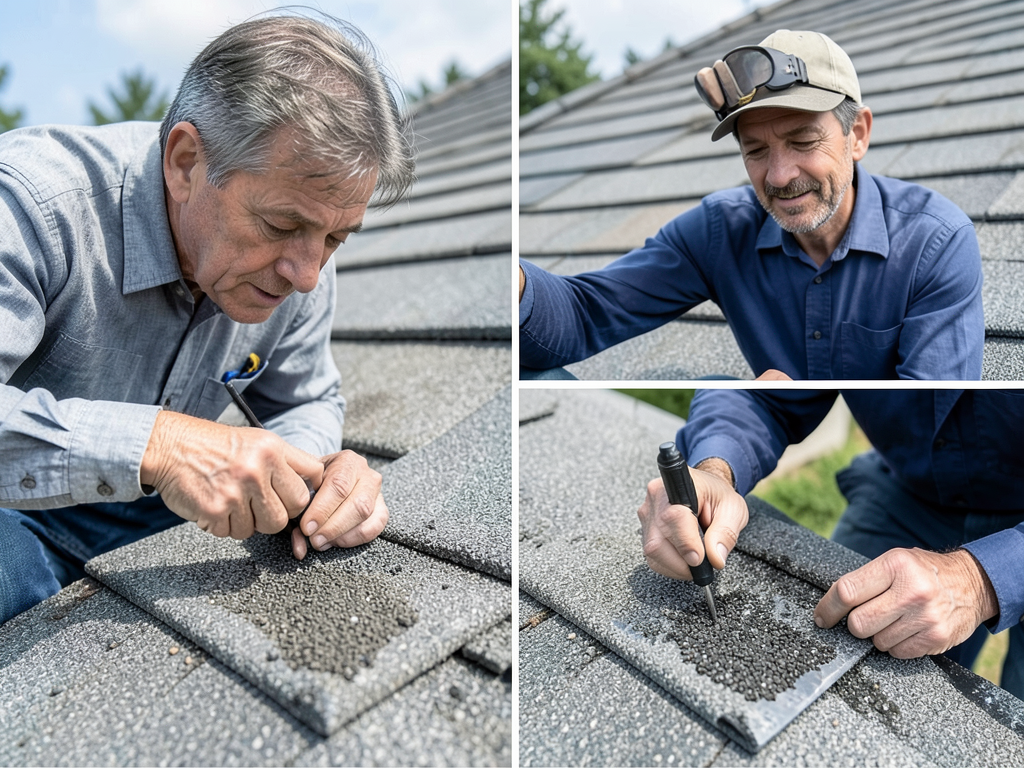
Professional roofers use a simple test to assess granule adhesion that you can try yourself. Wait for a dry day, then gently press a flathead screwdriver against a shingle in an area showing granule loss. Apply light pressure and drag the screwdriver across the surface.
Normal wear will show granules that resist removal. You might dislodge a few loose particles, but most remain firmly attached to the asphalt.
Storm damage or advanced aging will cause granules to flake off easily under light pressure. If you can remove granules with minimal effort, the adhesive bond has failed and the shingle is no longer providing adequate protection.
This test works best on south-facing slopes where sun exposure is greatest and granule loss typically occurs first. Compare results from different areas of your roof to identify problem spots.
When to Call for Professional Help
Knowing when to call a professional can save you from costly water damage repairs. Here are specific situations that warrant immediate professional attention:
After severe weather events including hailstorms, high winds, or heavy ice accumulation. Even if you don’t see obvious damage, professional inspection can identify problems that aren’t visible from ground level.
When granule loss is concentrated in specific areas rather than uniform across the roof. This pattern often indicates localized damage from falling branches, wind damage, or manufacturing defects.
If your roof is over 15 years old and showing accelerated granule loss. Age combined with granule loss significantly increases the risk of leaks and structural damage.
When you notice interior water stains or signs of moisture in your attic. By the time water penetrates your ceiling, the roof’s protective layers have already failed.
Professional roofers in Brookline use specialized equipment including moisture meters, infrared cameras, and drone inspections to assess roof condition without causing additional damage. They can also provide documentation for insurance claims if storm damage is identified.
Protecting Your Roof Investment
Prevention is always less expensive than repair. Here are steps Brookline homeowners can take to minimize granule loss and extend roof life:
Regular gutter cleaning prevents granule buildup that can accelerate deterioration. Clean gutters allow water to flow freely off the roof instead of backing up under shingles.
Tree trimming reduces debris accumulation and minimizes the risk of branches scraping against shingles during storms. Keep tree limbs at least six feet from your roof surface.
Proper attic ventilation prevents heat buildup that can accelerate granule loss. Hot attics cause shingles to become more pliable, making granules more likely to detach.
Prompt repairs of minor damage prevent small problems from becoming major issues. A single missing shingle can allow water to penetrate and damage surrounding areas.
Professional maintenance inspections every two to three years can identify developing problems before they cause significant damage. Look for contractors certified by the NRCA or manufacturers like GAF or CertainTeed.
Insurance Considerations for Storm Damage
Homeowners insurance typically covers sudden, accidental damage from storms but not gradual wear from normal aging. This distinction is crucial when filing claims for granule loss.
Document damage immediately after storms with photos showing the extent of granule loss, any visible damage to shingles, and the accumulation in gutters. Keep samples of granules if possible.
Request a professional inspection even if damage seems minor. Insurance companies often require certified documentation to process claims. Many roofing contractors in Pittsburgh offer free inspections specifically for insurance purposes.
Understand your policy’s depreciation provisions. Some policies pay the actual cash value of damage, which accounts for the age of your roof, while others provide replacement cost coverage without depreciation.
Act quickly on claims. Most insurance policies have time limits for filing storm damage claims, typically ranging from six months to one year after the damaging event.
Local Building Codes and Requirements
Brookline and the greater Pittsburgh area follow Pennsylvania’s Uniform Construction Code, which incorporates International Building Code standards. For roofing work, this means:
Permit requirements for any roofing project affecting more than 25% of the roof surface. This includes both repairs and complete replacements. Permits ensure work meets current building standards and passes inspection.
Ice and water shield requirements in cold climate zones like Pittsburgh. Building codes mandate waterproof underlayment in valleys, around roof penetrations, and along eaves where ice dams commonly form.
Ventilation standards require minimum net free vent area equal to 1/150 of the attic floor area, or 1/300 if a vapor retarder is installed. Proper ventilation prevents moisture buildup that accelerates granule loss.
Fire ratings for roofing materials must meet Class A, B, or C standards depending on the structure type. Class A provides the highest fire resistance and is required for most residential applications.
Working with a contractor familiar with local codes ensures your roof replacement or repair meets all requirements and maintains your home’s insurance coverage. How Much a Full Roof Replacement Actually Costs in Pittsburgh Right Now.
Making the Right Decision for Your Home
Deciding between repair and replacement depends on several factors specific to your situation:
Extent of damage determines whether spot repairs are feasible. If granule loss is limited to a few areas and the underlying shingles are still structurally sound, targeted repairs might suffice.
Age of your roof influences the cost-effectiveness of repairs. If your roof is near the end of its expected lifespan, investing in repairs might not be worthwhile compared to replacement.
Energy efficiency considerations become important if you’re planning to stay in your home long-term. Newer roofing materials offer better insulation and can reduce heating and cooling costs.
Future plans for your home affect your decision. If you plan to sell within a few years, a new roof can significantly increase property value and marketability.
Budget constraints always matter. While replacement costs more upfront, it might save money long-term by preventing water damage and improving energy efficiency.
A professional inspection can help you weigh these factors and make an informed decision based on your specific circumstances and the condition of your roof.
Frequently Asked Questions
How much granule loss is normal for a 10-year-old roof?
A 10-year-old roof should show minimal granule loss, primarily in gutters with a light sandy coating. The shingle surfaces should remain mostly covered with granules. Excessive loss at this age might indicate installation problems or accelerated wear from environmental factors.
Can I prevent granule loss completely?
No, some granule loss is inevitable as shingles age. However, you can minimize accelerated loss by maintaining proper attic ventilation, keeping gutters clean, trimming overhanging branches, and addressing minor damage promptly before it worsens.
Will my insurance cover granule loss?
Insurance typically covers sudden, accidental damage from storms but not gradual wear from normal aging. If granule loss results from a covered event like hail damage, your policy should cover repairs or replacement. Document damage immediately and request professional inspection for insurance claims.
How can I tell if granule loss is from hail damage?
Hail damage creates distinct circular or oval bare spots where hailstones struck shingles. These spots often feel slightly depressed compared to surrounding areas. The damage pattern typically shows more severe loss on roof slopes facing the storm’s direction and may include cracked or bruised shingles.
Should I replace my entire roof if I see granule loss?
Not necessarily. Minor granule loss doesn’t always require full replacement. A professional inspection can determine if spot repairs are sufficient or if replacement is needed. Factors include the extent of loss, roof age, and whether the underlying shingle structure remains intact.
Take Action Before Small Problems Become Major Repairs
Understanding the difference between normal granule loss and storm damage can save you thousands in unnecessary repairs or prevent costly water damage from ignored problems. While some granule loss is normal, concentrated areas of missing granules, bare spots on shingles, or excessive accumulation in gutters signal problems that need professional attention.
Pittsburgh’s climate creates unique challenges for roofs in Brookline, from freeze-thaw cycles to severe thunderstorms. Regular inspections, prompt maintenance, and knowing when to call a professional can extend your roof’s life and protect your home investment.
Don’t wait until water stains appear on your ceiling to address granule loss. A professional inspection can identify problems early and provide documentation for insurance claims if storm damage is present. Most reputable roofing contractors offer free inspections and can recommend the most cost-effective solution for your specific situation.
Call (878) 209-5522 today to schedule your free roof inspection. Our experienced technicians will assess your roof’s condition, identify any storm damage, and provide clear recommendations for protecting your home. Don’t let minor granule loss turn into major water damage. Pick up the phone and call (878) 209-5522 before the next storm hits.
You may also find this helpful. Spotting the Subtle Differences Between Wind Damage and Normal Wear in Lincoln Place.
{
“@context”: “https://schema.org”,
“@type”: “BlogPosting”,
“headline”: “The Difference Between Normal Granule Loss and Major Storm Damage on Your Brookline Roof”,
“description”: “Learn how to tell if the granules in your gutters are normal wear or signs of storm damage. Pittsburgh roofing expert explains what to look for.”,
“wordCount”: 2352,
“datePublished”: “2026-06-07T11:42:00.000Z”,
“dateModified”: “2026-06-07T11:42:00.000Z”,
“inLanguage”: “en-US”,
“mainEntityOfPage”: {
“@type”: “WebPage”,
“@id”: “https://victoryroofingpittsburgh.com”
},
“publisher”: {
“@type”: “LocalBusiness”,
“name”: “Victory Roofing Pittsburgh”,
“url”: “https://victoryroofingpittsburgh.com”
},
“author”: {
“@type”: “Organization”,
“name”: “Victory Roofing Pittsburgh”,
“url”: “https://victoryroofingpittsburgh.com”
},
“image”: {
“@type”: “ImageObject”,
“url”: “https://victoryroofingpittsburgh.com/wp-content/uploads/2026/03/the-difference-between-normal-granule-loss-and-maj-1.png”
}
}
{
“@context”: “https://schema.org”,
“@type”: “RoofingContractor”,
“name”: “Victory Roofing Pittsburgh”,
“url”: “https://victoryroofingpittsburgh.com”,
“address”: {
“@type”: “PostalAddress”,
“addressLocality”: “Pittsburgh”
},
“areaServed”: {
“@type”: “City”,
“name”: “Pittsburgh”
}
}
{
“@context”: “https://schema.org”,
“@type”: “FAQPage”,
“mainEntity”: [
{
“@type”: “Question”,
“name”: “How much granule loss is normal for a 10-year-old roof?”,
“acceptedAnswer”: {
“@type”: “Answer”,
“text”: “A 10-year-old roof should show minimal granule loss, primarily in gutters with a light sandy coating. The shingle surfaces should remain mostly covered with granules. Excessive loss at this age might indicate installation problems or accelerated wear from environmental factors.”
}
},
{
“@type”: “Question”,
“name”: “Can I prevent granule loss completely?”,
“acceptedAnswer”: {
“@type”: “Answer”,
“text”: “No, some granule loss is inevitable as shingles age. However, you can minimize accelerated loss by maintaining proper attic ventilation, keeping gutters clean, trimming overhanging branches, and addressing minor damage promptly before it worsens.”
}
},
{
“@type”: “Question”,
“name”: “Will my insurance cover granule loss?”,
“acceptedAnswer”: {
“@type”: “Answer”,
“text”: “Insurance typically covers sudden, accidental damage from storms but not gradual wear from normal aging. If granule loss results from a covered event like hail damage, your policy should cover repairs or replacement. Document damage immediately and request professional inspection for insurance claims.”
}
},
{
“@type”: “Question”,
“name”: “How can I tell if granule loss is from hail damage?”,
“acceptedAnswer”: {
“@type”: “Answer”,
“text”: “Hail damage creates distinct circular or oval bare spots where hailstones struck shingles. These spots often feel slightly depressed compared to surrounding areas. The damage pattern typically shows more severe loss on roof slopes facing the storm’s direction and may include cracked or bruised shingles.”
}
},
{
“@type”: “Question”,
“name”: “Should I replace my entire roof if I see granule loss?”,
“acceptedAnswer”: {
“@type”: “Answer”,
“text”: “Not necessarily. Minor granule loss doesn’t always require full replacement. A professional inspection can determine if spot repairs are sufficient or if replacement is needed. Factors include the extent of loss, roof age, and whether the underlying shingle structure remains intact.”
}
}
]
}
{
“@context”: “https://schema.org”,
“@type”: “BreadcrumbList”,
“itemListElement”: [
{
“@type”: “ListItem”,
“position”: 1,
“name”: “Home”,
“item”: “https://victoryroofingpittsburgh.com”
},
{
“@type”: “ListItem”,
“position”: 2,
“name”: “Blog”,
“item”: “https://victoryroofingpittsburgh.com/blog”
},
{
“@type”: “ListItem”,
“position”: 3,
“name”: “The Difference Between Normal Granule Loss and Major Storm Damage on Your Brookline Roof”
}
]
}
{
“@context”: “https://schema.org”,
“@type”: “Service”,
“serviceType”: “Roofing”,
“provider”: {
“@type”: “LocalBusiness”,
“name”: “Victory Roofing Pittsburgh”,
“url”: “https://victoryroofingpittsburgh.com”
},
“areaServed”: {
“@type”: “City”,
“name”: “Pittsburgh”
},
“description”: “Learn how to tell if the granules in your gutters are normal wear or signs of storm damage. Pittsburgh roofing expert explains what to look for.”
}