
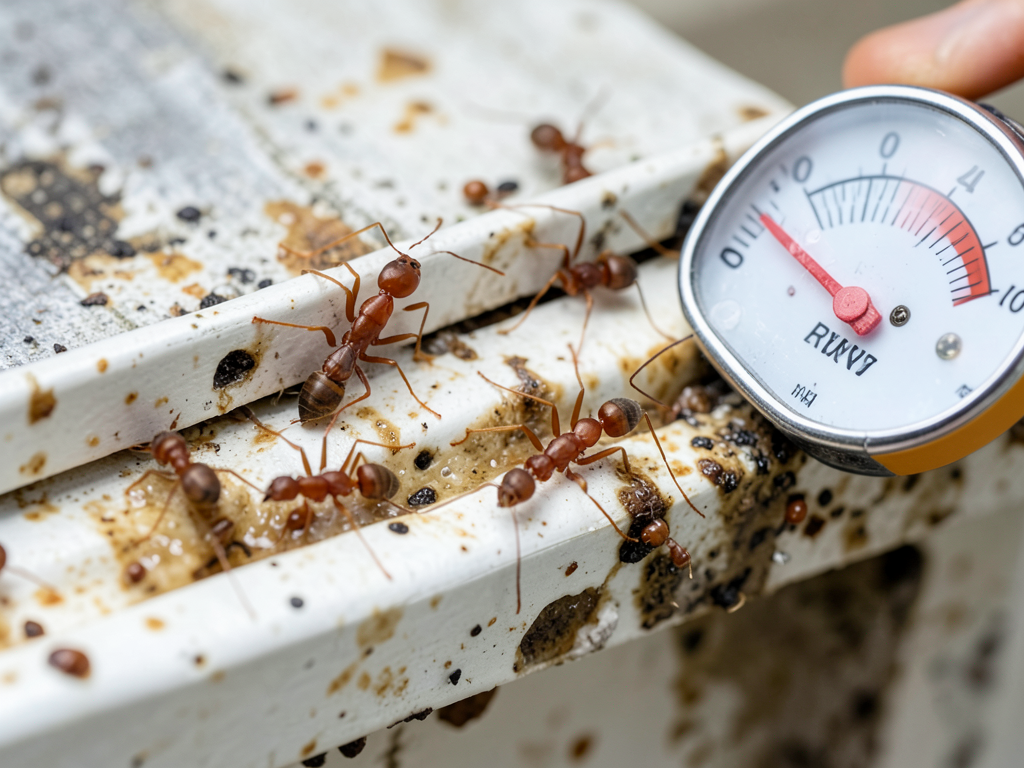
Why Carpenter Ants and Termites Love the Damp Roof Eaves of Allison Park Properties
Western Pennsylvania’s freeze-thaw cycles and heavy lake-effect snow create the perfect conditions for moisture to collect in roof eaves. When water seeps behind fascia boards and soffits, it softens wood and creates the ideal habitat for carpenter ants and termites. These pests don’t just damage wood—they signal serious moisture problems that can lead to structural failure if left untreated. Pennsylvania Department of Agriculture.
Homeowners in Allison Park often notice these pests during spring and early summer when colonies become active. The damp eaves provide both shelter and a food source, allowing infestations to grow rapidly. Understanding why these insects target specific roof areas helps you identify problems early and prevent costly damage.
How Moisture Creates the Perfect Pest Habitat
Roof eaves collect water from multiple sources. Ice dams form during winter freeze-thaw cycles, forcing water under shingles. Clogged gutters overflow and saturate fascia boards. Poor attic ventilation traps humidity that condenses on cold roof edges. Each moisture source weakens wood fibers and attracts wood-destroying insects. Commercial Gutter Systems.
Carpenter ants prefer damp, decaying wood but don’t eat it. They excavate galleries for nesting, creating smooth tunnels that weaken structural integrity. Termites consume cellulose directly, hollowing out beams from the inside. Both species thrive when moisture content exceeds 20 percent, which commonly occurs in poorly maintained eaves.
The combination of Western PA’s heavy snowfall and Allison Park’s mature tree canopy increases moisture retention. Leaves and debris trap water against roof edges. Snow piles up in shaded areas, taking longer to melt. These conditions create persistent damp zones that pests find irresistible.
Common Entry Points for Roof Pests
Damaged flashing around chimneys and vents provides direct access to roof cavities. Missing or cracked shingles expose underlayment to water infiltration. Gaps where fascia meets roof decking allow insects to enter undisturbed spaces. Even small openings become major problems when moisture compounds the damage.
Squirrel and raccoon damage often precedes pest infestations. These animals chew through roofing materials to create entry points. Once inside, their nesting materials retain moisture and attract carpenter ants. The resulting combination of physical damage and biological activity accelerates wood decay. Why Metal Roofing is Becoming the Top Choice for Homes in North Hills.
Attic ventilation issues contribute significantly to moisture problems. Insufficient intake vents cause negative pressure that draws humid air through any available gap. This continuous airflow carries wood particles and moisture into roof cavities, creating ideal conditions for termite colonies to establish themselves.
Diagnostic Signs of Moisture and Pest Damage
Visual inspection reveals early warning signs. Bubbling paint on fascia boards indicates trapped moisture. Dark stains on soffits suggest water penetration. Small piles of wood shavings near eaves point to carpenter ant activity. Mud tubes climbing foundation walls signal active termite colonies.. Read more about The Hidden Signs of Internal Roof Rot You Might Miss in Your Squirrel Hill Tudor Home.
Physical testing confirms moisture levels. A moisture meter reading above 15 percent on fascia boards warrants investigation. Pressing on wood with a screwdriver should feel solid. Soft spots that allow easy penetration indicate advanced decay requiring immediate attention.
Auditory clues help identify active infestations. Carpenter ants create rustling sounds when disturbed. Termites produce clicking noises as they communicate. These sounds often occur at night when colonies are most active and ambient noise is minimal.
Western PA Climate Impact on Roof Pests
Pennsylvania’s climate creates unique challenges for roof maintenance. Heavy snow loads stress roof structures and create ice dams. Rapid temperature swings cause expansion and contraction that opens gaps in roofing materials. High humidity levels in summer provide ideal conditions for pest reproduction. Roofing Scranton.
The Pennsylvania Department of Agriculture tracks termite activity patterns specific to Western PA counties. Their data shows peak swarming seasons align with our spring thaw periods. This timing coincides with when homeowners first notice pest problems after winter dormancy.
Local building codes require ice and water shield installation in cold climate zones. However, many older Allison Park homes predate these requirements. This leaves them vulnerable to the freeze-thaw damage that attracts wood-destroying insects.
Prevention and Professional Solutions
Proper roof maintenance prevents most moisture-related pest problems. Clean gutters twice yearly remove debris that traps water. Inspect flashing annually for signs of separation or corrosion. Replace damaged shingles promptly to maintain waterproof barriers.
Attic ventilation improvements reduce moisture accumulation. Adding ridge vents or improving soffit ventilation creates airflow that carries humidity away from roof structures. This simple upgrade often eliminates the damp conditions that attract pests.
Professional pest control services coordinate with roofing contractors for comprehensive solutions. Exterminating insects without addressing moisture sources leads to recurring infestations. Similarly, repairing roofs without eliminating existing colonies allows pests to return through new entry points.
When to Call a Professional
Visible insect activity requires immediate professional assessment. Finding winged termites indoors indicates an established colony nearby. Large carpenter ant trails suggest significant structural damage. These signs warrant inspection by both pest control and roofing experts. Expert Slate Roof Repair Services for Sewickley Historic Properties.
Water stains on interior ceilings often indicate roof leaks that have already caused damage. By the time stains appear, moisture has penetrated multiple layers of roofing materials. This creates ideal conditions for pests while compromising structural integrity.
Annual roof inspections catch problems early. Professional inspectors use moisture meters and thermal imaging to detect hidden damage. They identify pest entry points and recommend specific repairs before infestations become established.
Long-Term Protection Strategies
Modern roofing materials offer enhanced pest resistance. Synthetic underlayment provides better moisture barriers than traditional felt. Copper flashing resists corrosion and deters insects. These upgrades pay for themselves through reduced maintenance and pest prevention.
Landscaping modifications help reduce moisture near foundations. Trimming tree branches prevents leaves from accumulating on roofs. Proper grading directs water away from structures. These simple changes reduce the damp conditions that attract pests.
Regular maintenance schedules prevent minor issues from becoming major problems. Quarterly inspections catch early signs of moisture damage. Prompt repairs maintain waterproof barriers. This proactive approach costs less than emergency pest control and structural repairs.
Local Building Code Requirements
Allegheny County building codes specify moisture barrier requirements for roof installations. The International Residential Code mandates ice and water shield in designated climate zones. These regulations aim to prevent the moisture problems that lead to pest infestations. International Residential Code.
Pennsylvania’s Uniform Construction Code requires proper attic ventilation ratios. One square foot of net free ventilation area per 150 square feet of attic space prevents moisture accumulation. Many older homes don’t meet these standards, creating conditions favorable to pests.
Local permitting requirements ensure proper installation of moisture barriers. Permits verify that ice and water shield extends from eaves to at least 24 inches past interior wall lines. This coverage prevents ice dam formation that attracts wood-destroying insects.
Cost Considerations for Repairs
Early intervention costs significantly less than emergency repairs. Replacing damaged fascia boards costs hundreds rather than thousands for structural repairs. Pest control treatments range from $300 to $1,500 depending on infestation severity.
Insurance coverage varies by policy and damage cause. Most policies cover sudden damage from storms but exclude gradual deterioration from moisture and pests. This makes preventive maintenance essential for protecting your investment.
Professional inspections typically cost $150 to $300 but identify problems before they escalate. Many roofing companies offer free estimates with repair proposals. This initial investment often prevents thousands in future damage.
Frequently Asked Questions
How can I tell if I have carpenter ants versus termites?
Carpenter ants are larger with elbowed antennae and narrow waists. They create smooth galleries and leave wood shavings. Termites are smaller with straight antennae and thick waists. They create mud tubes and consume wood directly, leaving hollowed-out galleries.
Are carpenter ants dangerous to my home’s structure?
Yes. While they don’t eat wood like termites, carpenter ants excavate extensive galleries that weaken structural beams and roof supports. Large colonies can cause significant damage over several years if left untreated.
Can I treat pest problems myself?
DIY treatments often provide temporary relief but rarely eliminate established colonies. Professional pest control uses specialized products and application methods that reach deep into nesting sites. They also identify and address underlying moisture problems.
How often should I inspect my roof for pest problems?
Annual professional inspections are recommended. Homeowners should visually check roof edges quarterly for signs of damage, moisture, or pest activity. Spring and fall inspections catch problems before they worsen.
Will fixing my roof prevent future pest problems?
Proper roof repairs eliminate many entry points and moisture sources. However, existing colonies may remain active in surrounding structures. Comprehensive treatment requires both pest control and moisture management solutions.
Take Action Before Damage Spreads
Moisture in roof eaves creates the perfect storm for carpenter ants and termites. These pests thrive in Western Pennsylvania’s climate, especially in older Allison Park homes with aging roofing systems. The longer you wait, the more extensive and expensive the damage becomes.
Don’t let wood-destroying insects compromise your home’s structural integrity. Professional inspection can identify moisture problems before pests establish colonies. Early intervention saves money and prevents the stress of emergency repairs.
Call (878) 209-5522 today to schedule your comprehensive roof inspection. Our experienced technicians use moisture meters and thermal imaging to detect hidden damage. We provide detailed reports and recommend specific solutions tailored to your home’s needs.
Pick up the phone and call (878) 209-5522 before the next storm hits. Spring moisture creates ideal conditions for pest activity. Protect your investment with professional assessment and timely repairs. Your home deserves expert care from technicians who understand Western PA’s unique challenges.
{
“@context”: “https://schema.org”,
“@type”: “BlogPosting”,
“headline”: “Why Carpenter Ants and Termites Love the Damp Roof Eaves of Allison Park Properties”,
“description”: “Carpenter ants and termites thrive in damp Allison Park roof eaves. Learn how Western PA moisture creates the perfect conditions for these destructive pests and what to do.”,
“wordCount”: 1586,
“datePublished”: “2026-05-29T08:10:00.000Z”,
“dateModified”: “2026-05-29T08:10:00.000Z”,
“inLanguage”: “en-US”,
“mainEntityOfPage”: {
“@type”: “WebPage”,
“@id”: “https://victoryroofingpittsburgh.com”
},
“publisher”: {
“@type”: “LocalBusiness”,
“name”: “Victory Roofing Pittsburgh”,
“url”: “https://victoryroofingpittsburgh.com”
},
“author”: {
“@type”: “Organization”,
“name”: “Victory Roofing Pittsburgh”,
“url”: “https://victoryroofingpittsburgh.com”
},
“image”: {
“@type”: “ImageObject”,
“url”: “https://victoryroofingpittsburgh.com/wp-content/uploads/2026/03/why-carpenter-ants-and-termites-love-the-damp-roof-1.png”
}
}
{
“@context”: “https://schema.org”,
“@type”: “RoofingContractor”,
“name”: “Victory Roofing Pittsburgh”,
“url”: “https://victoryroofingpittsburgh.com”,
“address”: {
“@type”: “PostalAddress”,
“addressLocality”: “Pittsburgh”
},
“areaServed”: {
“@type”: “City”,
“name”: “Pittsburgh”
}
}
{
“@context”: “https://schema.org”,
“@type”: “FAQPage”,
“mainEntity”: [
{
“@type”: “Question”,
“name”: “How can I tell if I have carpenter ants versus termites?”,
“acceptedAnswer”: {
“@type”: “Answer”,
“text”: “Carpenter ants are larger with elbowed antennae and narrow waists. They create smooth galleries and leave wood shavings. Termites are smaller with straight antennae and thick waists. They create mud tubes and consume wood directly, leaving hollowed-out galleries.”
}
},
{
“@type”: “Question”,
“name”: “Are carpenter ants dangerous to my home’s structure?”,
“acceptedAnswer”: {
“@type”: “Answer”,
“text”: “Yes. While they don’t eat wood like termites, carpenter ants excavate extensive galleries that weaken structural beams and roof supports. Large colonies can cause significant damage over several years if left untreated.”
}
},
{
“@type”: “Question”,
“name”: “Can I treat pest problems myself?”,
“acceptedAnswer”: {
“@type”: “Answer”,
“text”: “DIY treatments often provide temporary relief but rarely eliminate established colonies. Professional pest control uses specialized products and application methods that reach deep into nesting sites. They also identify and address underlying moisture problems.”
}
},
{
“@type”: “Question”,
“name”: “How often should I inspect my roof for pest problems?”,
“acceptedAnswer”: {
“@type”: “Answer”,
“text”: “Annual professional inspections are recommended. Homeowners should visually check roof edges quarterly for signs of damage, moisture, or pest activity. Spring and fall inspections catch problems before they worsen.”
}
},
{
“@type”: “Question”,
“name”: “Will fixing my roof prevent future pest problems?”,
“acceptedAnswer”: {
“@type”: “Answer”,
“text”: “Proper roof repairs eliminate many entry points and moisture sources. However, existing colonies may remain active in surrounding structures. Comprehensive treatment requires both pest control and moisture management solutions.”
}
}
]
}
{
“@context”: “https://schema.org”,
“@type”: “BreadcrumbList”,
“itemListElement”: [
{
“@type”: “ListItem”,
“position”: 1,
“name”: “Home”,
“item”: “https://victoryroofingpittsburgh.com”
},
{
“@type”: “ListItem”,
“position”: 2,
“name”: “Blog”,
“item”: “https://victoryroofingpittsburgh.com/blog”
},
{
“@type”: “ListItem”,
“position”: 3,
“name”: “Why Carpenter Ants and Termites Love the Damp Roof Eaves of Allison Park Properties”
}
]
}
{
“@context”: “https://schema.org”,
“@type”: “Service”,
“serviceType”: “Roofing”,
“provider”: {
“@type”: “LocalBusiness”,
“name”: “Victory Roofing Pittsburgh”,
“url”: “https://victoryroofingpittsburgh.com”
},
“areaServed”: {
“@type”: “City”,
“name”: “Pittsburgh”
},
“description”: “Carpenter ants and termites thrive in damp Allison Park roof eaves. Learn how Western PA moisture creates the perfect conditions for these destructive pests and what to do.”
}