
Maintaining the Historic Character of Your Bloomfield Victorian With the Right Roof Choice
Your Bloomfield Victorian isn’t just a house. It’s a piece of Pittsburgh’s architectural heritage. Those steep gables, ornate gingerbread trim, and distinctive turrets tell a story that spans over a century. When your roof needs attention, the stakes go beyond simple weather protection. You’re making a decision that impacts the very character of your home and your neighborhood. Pittsburgh Historic Review Commission.
The challenge is real. Victorian homes in Bloomfield face unique pressures from Pittsburgh’s climate. Heavy lake-effect snow loads, rapid freeze-thaw cycles, and severe spring thunderstorms test every roofing material to its limits. But these same homes also sit within Pittsburgh’s historic districts, where the Pittsburgh Historic Review Commission oversees any exterior changes. Your roofing choice must balance modern durability with architectural authenticity. Why Metal Roofing is Becoming the Top Choice for Homes in North Hills.
Understanding Victorian Roofing Materials That Honor Bloomfield’s History
Victorian homeowners in Bloomfield have several material options that can preserve their home’s historic character while meeting today’s performance standards. Each material carries different implications for authenticity, cost, and long-term maintenance.
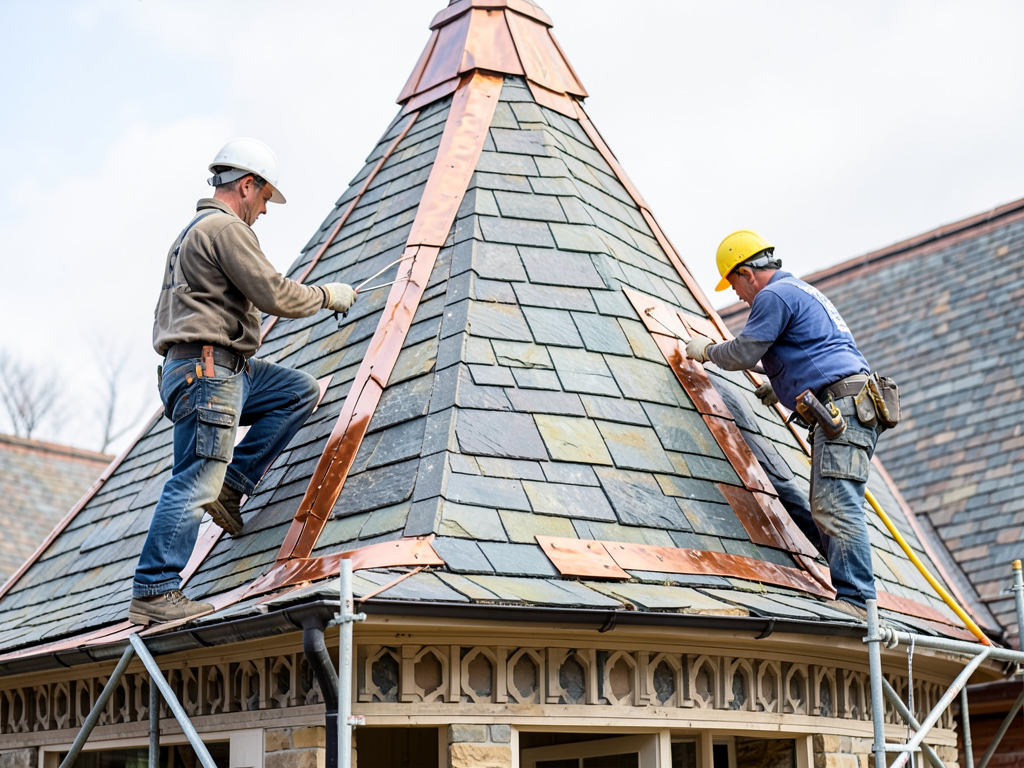
Natural slate remains the gold standard for authentic Victorian restoration. Quarried slate offers unmatched longevity, often lasting 75 to 100 years when properly installed. The material’s natural variation in color and thickness creates the distinctive texture that defines historic Victorian roofs. However, natural slate requires structural reinforcement for many older homes, as the weight can exceed 800 pounds per square.
Synthetic slate provides a practical alternative for budget-conscious preservation. Modern composite materials mimic the appearance of natural slate while weighing 75% less. Products from manufacturers like DaVinci and EcoStar offer 50-year warranties and excellent impact resistance. The key is selecting products with varied color blends that avoid the uniform appearance of cheaper imitations.
Designer asphalt shingles have evolved to serve Victorian aesthetics. High-end architectural shingles now feature dramatic shadow lines, varied tab sizes, and multi-color blends that capture Victorian depth. While not historically accurate, premium designer shingles from GAF or CertainTeed can achieve a period-appropriate appearance at a fraction of slate’s cost.
The Technical Challenges of Victorian Roof Restoration in Bloomfield
Working on a 100-year-old Victorian presents challenges that newer homes simply don’t face. Understanding these technical hurdles helps you appreciate why specialized expertise matters. Expert Slate Roof Repair Services for Sewickley Historic Properties.
Structural integrity becomes a primary concern during restoration. Many Victorian homes in Bloomfield were built with balloon-frame construction, where wall studs extend continuously from foundation to roof. This design creates unique load paths that modern contractors must understand to avoid compromising structural stability during roof replacement.
Custom metalwork defines Victorian roof details. Turrets, finials, and complex valleys require copper flashing and custom-fabricated components. Standard off-the-shelf flashing won’t work around curved turret walls or intricate gingerbread patterns. Each piece must be hand-formed to match the home’s specific geometry.
Narrow Bloomfield streets complicate material delivery and equipment staging. Liberty Avenue and Penn Avenue were designed for horse-drawn carriages, not modern roofing trucks. Contractors must plan for manual material handling, often carrying materials through narrow alleys or across neighboring properties. This logistical challenge directly impacts project timelines and costs.
Navigating Pittsburgh’s Historic Preservation Requirements
The Pittsburgh Historic Review Commission enforces strict guidelines for exterior modifications in historic districts. Understanding these requirements before starting your project prevents costly delays and rework. Homeowner’s Guide to Roofing.
Commission approval requires detailed documentation. You’ll need architectural drawings showing existing conditions, material samples, and a preservation plan that demonstrates how your proposed work maintains the building’s historic character. The commission particularly scrutinizes material changes that alter the home’s visual appearance from public rights-of-way.
Ice and water shield requirements have evolved since your home’s original construction. Pittsburgh building codes now mandate ice and water protection in valleys and along eaves for cold-climate zones. This requirement, established in the 2021 International Residential Code, creates a conflict between modern code compliance and historic material authenticity. Your contractor must document how they’ll meet both standards.
Energy efficiency upgrades face preservation scrutiny. While attic ventilation and insulation improvements are generally permitted, the commission evaluates how these changes might affect the building’s historic fabric. Any modifications to the roof structure or visible components require justification that balances energy performance with preservation principles.
Common Victorian Roofing Problems Specific to Pittsburgh’s Climate
Victorian homes in Bloomfield experience roofing failures that differ from modern construction. Recognizing these patterns helps you identify problems early and choose appropriate solutions. Roofing Scranton.
Ice dam formation exploits Victorian roof vulnerabilities. The complex geometry of turrets, multiple valleys, and varying roof planes creates numerous cold spots where snow melts and refreezes. Pittsburgh’s freeze-thaw cycles, averaging 130 days annually, accelerate this process. Ice dams can force water under shingles, damaging interior plaster and causing wood rot in decorative trim.
Flashing deterioration around turrets and chimneys represents a common failure point. Original copper flashing, often over 100 years old, develops fatigue cracks at expansion joints. The thermal cycling in Pittsburgh, where temperatures can swing 40 degrees in a single day, exacerbates this deterioration. Failed flashing allows water infiltration that damages both the roof structure and interior finishes.
Gutter systems designed for 1900s rainfall struggle with modern precipitation patterns. Historic box gutters, typically 5 to 6 inches wide, cannot handle the intense rainfall events becoming more common in Western Pennsylvania. The National Weather Service reports a 20% increase in heavy precipitation events over the past 50 years in the Pittsburgh region, overwhelming undersized drainage systems.
Material Comparison for Victorian Roof Restoration
| Material | Cost per Square | Lifespan | Historic Accuracy | Weight (lbs) |
|---|---|---|---|---|
| Natural Slate | $1,500-$2,500 | 75-100 years | Excellent | 800-1,200 |
| Synthetic Slate | $400-$600 | 40-50 years | Good | 200-300 |
| Designer Asphalt | 25-30 years | Fair | 250-350 | |
| Copper | $2,000-$3,000 | 60-80 years | Excellent | 150-200 |
The Restoration Process: What to Expect During Your Victorian Roof Project
Victorian roof restoration requires a methodical approach that differs significantly from standard residential roofing. Understanding the process helps you prepare for the unique challenges ahead.. Read more about Comparing Standing Seam and Corrugated Metal Roofing for Your Avalon Home.
- Historic Documentation and Assessment
Before any work begins, your contractor should document existing conditions through detailed photography, measurements, and material analysis. This documentation serves multiple purposes: it guides the restoration approach, provides evidence for historic commission approval, and creates a baseline for future maintenance.. Read more about Navigating HARB Approval for New Roofs in the Mexican War Streets Historic District.
- Structural Evaluation and Reinforcement
Victorian roof structures often require reinforcement before new materials can be installed. This may involve sistering rafters, adding collar ties, or installing new ridge beams. The evaluation must consider the home’s original construction methods and any previous modifications that may have compromised structural integrity.
- Custom Fabrication of Historic Details
Turrets, finials, and decorative elements require custom fabrication. Your contractor should have relationships with metal shops experienced in historical restoration. Each component must be measured, mocked up, and installed to match the home’s original geometry precisely.
- Material Installation with Period-Appropriate Techniques
Installation methods for historic materials differ from modern practices. Slate installation requires specific headlap calculations based on roof pitch and exposure. Copper flashing must be soldered using traditional techniques. These period-appropriate methods ensure both authenticity and long-term performance.. Read more about A Complete Comparison of Real Slate and Synthetic Shingles for Your Regent Square Property.
Cost Factors Specific to Victorian Roof Restoration in Bloomfield
Victorian roof restoration costs vary significantly based on several factors unique to historic homes. Understanding these variables helps you budget appropriately and avoid surprises.
Material selection drives the largest cost differential. Natural slate can cost three to five times more than designer asphalt shingles. However, the total project cost must account for structural modifications required for heavier materials. A home needing $15,000 in structural reinforcement may make lighter synthetic materials more cost-effective despite higher material costs.
Custom fabrication adds significant labor costs. Hand-formed copper flashing, custom turret caps, and replicated decorative elements require skilled craftsmen who command premium rates. These specialized skills are increasingly rare, and scheduling can extend project timelines by weeks or months.
Historic commission compliance creates indirect costs. The approval process typically adds 30 to 60 days to project scheduling. You may need to hire a preservation architect or consultant to prepare documentation, adding $2,000 to $5,000 in soft costs. These expenses are often overlooked in initial budgeting.
Maintaining Your Restored Victorian Roof for Long-Term Preservation
Restoration represents a significant investment that requires ongoing maintenance to protect your home’s historic character. A proactive maintenance approach prevents minor issues from becoming major restoration projects.
Annual inspections should focus on historic failure patterns. Pay particular attention to turret flashing, valley areas, and decorative trim intersections. These locations experience the highest stress from thermal cycling and water infiltration. Early detection of cracked solder joints or lifted shingles prevents interior damage.
Gutter maintenance becomes critical for Victorian roof longevity. Historic homes often have complex gutter systems with multiple downspouts and underground drains. Regular cleaning prevents ice dam formation and protects decorative fascia boards from water damage. Consider upgrading to larger capacity gutters while maintaining historic profiles.
Documentation creates value for future preservation efforts. Maintain records of all maintenance, repairs, and material specifications. This documentation helps future owners understand the roof’s history and makes it easier to match replacement materials. It also demonstrates your commitment to preservation if you ever need to work with the historic commission again.
Frequently Asked Questions
How long does a Victorian roof restoration typically take in Bloomfield?
Most Victorian roof restorations in Bloomfield require 3 to 6 weeks for complete replacement, depending on the home’s complexity and weather conditions. Custom fabrication for turrets and decorative elements can extend timelines by 2 to 4 weeks. Historic commission approval adds 30 to 60 days to project scheduling. How Much a Full Roof Replacement Actually Costs in Pittsburgh Right Now.
Can I install solar panels on my Victorian roof without historic commission approval?
Solar panel installations on visible roof surfaces typically require historic commission approval in Bloomfield. The commission evaluates how panels affect the building’s historic character from public view. Ground-mounted systems or installations on non-visible roof sections may qualify for exemptions, but you should consult the commission before proceeding.. Read more about Why Solar Shingles Might Be a Better Look for Your Point Breeze Historic Home than Panels.
What’s the typical return on investment for Victorian roof restoration?
Quality Victorian roof restoration typically returns 60 to 80% of the investment upon resale, with higher returns in historic districts where architectural authenticity drives property values. The investment also provides energy efficiency improvements, prevents costly water damage, and preserves your home’s historic character, which has intrinsic value beyond pure financial return.

Choosing the Right Contractor for Your Victorian Roof Project
Not all roofing contractors have the expertise required for Victorian restoration. Selecting the right professional can mean the difference between a successful preservation project and costly mistakes that damage your home’s historic character.. Read more about How to Choose a Roofing Color that Complements the Traditional Red Brick Houses in Stanton Heights.
Look for demonstrated experience with historic properties in Pittsburgh. Ask for specific examples of Victorian projects they’ve completed in Bloomfield, Lawrenceville, or other historic neighborhoods. Request references from homeowners who’ve worked with the historic commission. Experience with modern roofing doesn’t translate to historic restoration expertise.
Verify their understanding of historic preservation principles. A qualified contractor should discuss approaches to maintaining historic character, not just selling materials. They should ask about your goals for preservation versus modernization and explain how different approaches affect both appearance and performance.
Check their relationships with preservation professionals. Established contractors working in historic districts typically have relationships with preservation architects, structural engineers familiar with historic construction, and metal fabricators experienced in historical restoration. These relationships indicate they understand the complexity of Victorian projects.
Case Study: Liberty Avenue Victorian Roof Restoration
A recent project on Liberty Avenue demonstrates the complexities and rewards of Victorian roof restoration. The 1895 Queen Anne home featured a complex turret, multiple gables, and original slate that had reached the end of its service life.
The restoration required structural reinforcement to support new natural slate, custom copper flashing for the turret, and matching replacement slate from the original quarry. The project took 8 weeks and cost $48,000, including $8,000 in structural modifications and $12,000 in custom metalwork.
The historic commission approved the project based on the contractor’s detailed documentation and preservation approach. The new roof maintains the home’s historic character while providing 75 to 100 years of service life. The homeowner reports improved energy efficiency and the satisfaction of preserving a piece of Bloomfield’s architectural heritage.
Protecting Your Investment: The Next Steps
Your Victorian home represents a significant investment in both financial and historical terms. The right roofing choice protects that investment while honoring the architectural heritage that makes Bloomfield special.. Read more about Choosing the Right Roofing Material for Mid-Century Modern Homes in Swisshelm Park.
Start by scheduling a professional assessment with a contractor experienced in historic restoration. They should evaluate your roof’s current condition, discuss your preservation goals, and outline approaches that balance authenticity with modern performance requirements.
Remember that Victorian roof restoration is not a DIY project or a task for general contractors. The combination of historic preservation requirements, complex structural issues, and specialized materials demands expertise that only comes from years of experience with historic properties.
Call (878) 209-5522 today to schedule your Victorian roof assessment. Our team understands the unique challenges of preserving Bloomfield’s architectural heritage while providing the durability and protection your home needs for the next century.
Don’t wait until winter storms reveal your roof’s vulnerabilities. Take action now to protect your Victorian home’s character and your family’s comfort. The next freeze-thaw cycle could cause damage that costs far more to repair than proactive restoration.
Your Bloomfield Victorian deserves specialized care that honors its history while preparing it for the future. Contact us today to begin the conversation about preserving your home’s architectural legacy. For more information, visit National Park Service preservation guidelines.
{
“@context”: “https://schema.org”,
“@type”: “BlogPosting”,
“headline”: “Maintaining the Historic Character of Your Bloomfield Victorian With the Right Roof Choice”,
“description”: “Protect your Bloomfield Victorian’s charm with expert roofing solutions. Learn about historic materials, preservation standards, and local craftsmanship for Pittsburgh’s iconic homes.”,
“wordCount”: 2238,
“datePublished”: “2026-04-26T09:09:00.000Z”,
“dateModified”: “2026-04-26T09:09:00.000Z”,
“inLanguage”: “en-US”,
“mainEntityOfPage”: {
“@type”: “WebPage”,
“@id”: “https://victoryroofingpittsburgh.com”
},
“publisher”: {
“@type”: “LocalBusiness”,
“name”: “Victory Roofing Pittsburgh”,
“url”: “https://victoryroofingpittsburgh.com”
},
“author”: {
“@type”: “Organization”,
“name”: “Victory Roofing Pittsburgh”,
“url”: “https://victoryroofingpittsburgh.com”
},
“image”: {
“@type”: “ImageObject”,
“url”: “https://victoryroofingpittsburgh.com/wp-content/uploads/2026/03/maintaining-the-historic-character-of-your-bloomfi-1.png”
}
}
{
“@context”: “https://schema.org”,
“@type”: “RoofingContractor”,
“name”: “Victory Roofing Pittsburgh”,
“url”: “https://victoryroofingpittsburgh.com”,
“address”: {
“@type”: “PostalAddress”,
“addressLocality”: “Pittsburgh”
},
“areaServed”: {
“@type”: “City”,
“name”: “Pittsburgh”
}
}
{
“@context”: “https://schema.org”,
“@type”: “FAQPage”,
“mainEntity”: [
{
“@type”: “Question”,
“name”: “How long does a Victorian roof restoration typically take in Bloomfield?”,
“acceptedAnswer”: {
“@type”: “Answer”,
“text”: “Most Victorian roof restorations in Bloomfield require 3 to 6 weeks for complete replacement, depending on the home’s complexity and weather conditions. Custom fabrication for turrets and decorative elements can extend timelines by 2 to 4 weeks. Historic commission approval adds 30 to 60 days to project scheduling. How Much a Full Roof Replacement Actually Costs in Pittsburgh Right Now.”
}
},
{
“@type”: “Question”,
“name”: “Can I install solar panels on my Victorian roof without historic commission approval?”,
“acceptedAnswer”: {
“@type”: “Answer”,
“text”: “Solar panel installations on visible roof surfaces typically require historic commission approval in Bloomfield. The commission evaluates how panels affect the building’s historic character from public view. Ground-mounted systems or installations on non-visible roof sections may qualify for exemptions, but you should consult the commission before proceeding.”
}
},
{
“@type”: “Question”,
“name”: “What’s the typical return on investment for Victorian roof restoration?”,
“acceptedAnswer”: {
“@type”: “Answer”,
“text”: “Quality Victorian roof restoration typically returns 60 to 80% of the investment upon resale, with higher returns in historic districts where architectural authenticity drives property values. The investment also provides energy efficiency improvements, prevents costly water damage, and preserves your home’s historic character, which has intrinsic value beyond pure financial return.”
}
}
]
}
{
“@context”: “https://schema.org”,
“@type”: “HowTo”,
“name”: “Victorian Roof Restoration Process”,
“step”: [
{
“@type”: “HowToStep”,
“position”: 1,
“name”: “Historic Documentation and Assessment”,
“text”: “Before any work begins, your contractor should document existing conditions through detailed photography, measurements, and material analysis. This documentation serves multiple purposes: it guides the restoration approach, provides evidence for historic commission approval, and creates a baseline for future maintenance.”
},
{
“@type”: “HowToStep”,
“position”: 2,
“name”: “Structural Evaluation and Reinforcement”,
“text”: “Victorian roof structures often require reinforcement before new materials can be installed. This may involve sistering rafters, adding collar ties, or installing new ridge beams. The evaluation must consider the home’s original construction methods and any previous modifications that may have compromised structural integrity.”
},
{
“@type”: “HowToStep”,
“position”: 3,
“name”: “Custom Fabrication of Historic Details”,
“text”: “Turrets, finials, and decorative elements require custom fabrication. Your contractor should have relationships with metal shops experienced in historical restoration. Each component must be measured, mocked up, and installed to match the home’s original geometry precisely.”
},
{
“@type”: “HowToStep”,
“position”: 4,
“name”: “Material Installation with Period-Appropriate Techniques”,
“text”: “Installation methods for historic materials differ from modern practices. Slate installation requires specific headlap calculations based on roof pitch and exposure. Copper flashing must be soldered using traditional techniques. These period-appropriate methods ensure both authenticity and long-term performance.”
}
],
“image”: “https://victoryroofingpittsburgh.com/wp-content/uploads/2026/03/maintaining-the-historic-character-of-your-bloomfi-1.png”
}
{
“@context”: “https://schema.org”,
“@type”: “BreadcrumbList”,
“itemListElement”: [
{
“@type”: “ListItem”,
“position”: 1,
“name”: “Home”,
“item”: “https://victoryroofingpittsburgh.com”
},
{
“@type”: “ListItem”,
“position”: 2,
“name”: “Blog”,
“item”: “https://victoryroofingpittsburgh.com/blog”
},
{
“@type”: “ListItem”,
“position”: 3,
“name”: “Maintaining the Historic Character of Your Bloomfield Victorian With the Right Roof Choice”
}
]
}
{
“@context”: “https://schema.org”,
“@type”: “Service”,
“serviceType”: “Roofing”,
“provider”: {
“@type”: “LocalBusiness”,
“name”: “Victory Roofing Pittsburgh”,
“url”: “https://victoryroofingpittsburgh.com”
},
“areaServed”: {
“@type”: “City”,
“name”: “Pittsburgh”
},
“description”: “Protect your Bloomfield Victorian’s charm with expert roofing solutions. Learn about historic materials, preservation standards, and local craftsmanship for Pittsburgh’s iconic homes.”
}