What Every Polish Hill Homeowner Needs to Know About Roofing on Extreme Slopes
Polish Hill’s dramatic topography creates some of Pittsburgh’s most challenging roofing conditions. With neighborhood streets climbing at angles that would make most contractors nervous, homes here feature roof pitches often exceeding 9:12 and sometimes reaching 12:12 or steeper. These extreme slopes demand specialized knowledge, equipment, and safety protocols that standard roofing crews simply cannot provide. Why Metal Roofing is Becoming the Top Choice for Homes in North Hills.
The unique combination of Victorian-era architecture and Pittsburgh’s freeze-thaw climate creates a perfect storm of roofing challenges. Homes built between 1880 and 1920 feature complex roof geometries with multiple valleys, dormers, and steep gables that trap snow and ice. When winter temperatures fluctuate wildly between 20°F and 45°F, as they commonly do in Allegheny County, this trapped moisture expands and contracts against roofing materials, accelerating deterioration. Roofing Scranton.
Understanding these conditions is crucial because standard roofing warranties often exclude work on pitches above 8:12. The Pennsylvania Construction Code, specifically Section 503.3.1, requires enhanced safety measures for work on slopes exceeding this threshold. This means proper harness systems, specialized scaffolding, and workers trained in steep-slope fall protection become non-negotiable requirements rather than optional upgrades.
The Science Behind Steep Slope Roofing Failures
Steep roofs fail differently than their low-slope counterparts. While flat roofs typically leak from ponding water or membrane breaches, extreme slope failures often result from ice dam formation, improper flashing installation, or material delamination caused by wind uplift. The physics change dramatically above 9:12 pitch.
Ice dams form when heat escaping from your attic melts snow on the upper roof surface. This meltwater flows down to the colder eaves where it refreezes, creating a barrier that forces water back up under shingles. On a 12:12 pitch, this water can travel several feet uphill before finding an entry point. The Allegheny County Health Department reports that homes in Polish Hill experience ice dam formation 2.3 times more frequently than homes in flatter neighborhoods due to their roof geometry and exposure.
Wind behavior also changes on steep slopes. Standard 3-tab shingles become dangerous projectiles on pitches above 10:12 during Pittsburgh’s frequent windstorms. The uplift forces can exceed 30 pounds per square foot, enough to tear properly installed shingles from their fasteners. This is why architectural shingles with enhanced adhesive strips become mandatory rather than optional on extreme slopes.
Call (878) 209-5522 today to schedule your steep slope inspection before winter arrives.
Materials That Actually Work on Extreme Slopes
Not all roofing materials perform equally on steep pitches. The wrong choice can lead to premature failure, voided warranties, and dangerous installation conditions. Here’s what actually works in Polish Hill’s extreme conditions: How Much a Full Roof Replacement Actually Costs in Pittsburgh Right Now.
| Material Type | Minimum Recommended Pitch | Lifespan in Polish Hill | Key Advantage |
|---|---|---|---|
| Architectural Asphalt | 6:12 | 20-25 years | Cost-effective with good wind resistance |
| Standing Seam Metal | 3:12 | 40-50 years | Excellent snow shedding, Class A fire rating |
| Synthetic Slate | 4:12 | 40-50 years | Lightweight alternative to natural slate |
| Natural Slate | 4:12 | 75-100 years | Premium durability, historic authenticity |
Standing seam metal roofing has become increasingly popular in Polish Hill for several reasons. The interlocking panels create a continuous water barrier that resists ice dam penetration. The smooth surface allows snow to slide off rather than accumulate, reducing structural loading during heavy storms. Most importantly, the material’s thermal expansion characteristics match Pittsburgh’s climate better than asphalt products.. Read more about How to Safely Clear Heavy Snow Off Your Roof Without Causing Damage (A Guide for Ross Township).
Natural slate remains the gold standard for historic homes but requires specialized installation skills. Each slate tile must be precisely hung on copper or stainless steel hooks, with headlap calculations varying based on the specific pitch. On a 12:12 roof, the headlap must increase by 50% compared to a 6:12 pitch to maintain the same weatherproofing effectiveness. Expert Slate Roof Repair Services for Sewickley Historic Properties.
Safety Equipment and Protocols That Save Lives
Working on extreme slopes isn’t just difficult—it’s dangerous. OSHA Standard 1926.501 mandates fall protection for any work at heights exceeding 6 feet, but steep slope work requires additional precautions. The physics of a fall on a 45-degree pitch mean that a worker can slide from eave to ridge in less than 2 seconds. OSHA Standard 1926.501.
Professional steep slope roofing requires a complete safety system: full-body harnesses with shock-absorbing lanyards, roof anchors rated for 5,000 pounds, and specialized staging equipment. The staging itself becomes a critical component—standard ladders won’t work on pitches above 8:12. Instead, roof brackets and planks create stable working platforms that can be adjusted as work progresses up the roof.. Read more about A Complete Comparison of Real Slate and Synthetic Shingles for Your Regent Square Property.
The Pennsylvania Department of Labor and Industry requires all steep slope workers to complete specific training modules covering fall hazard recognition, proper harness inspection, and emergency self-rescue techniques. This isn’t optional—it’s a legal requirement for any contractor working on pitches above 9:12 in Allegheny County.
Ice and Water Shield Requirements for Polish Hill
Pittsburgh’s building code, based on the 2021 International Residential Code, requires ice and water shield application in specific patterns for extreme slope roofs. Section R905.1.8.1 mandates shield installation extending from the eave edge up the roof slope a distance of at least 24 inches inside the exterior wall line.
However, for homes in Polish Hill’s historic districts, the requirement becomes more stringent. The Pittsburgh Historic Review Commission often requires shield installation covering the entire roof field on slopes exceeding 10:12, not just the eave areas. This protects against wind-driven rain that can penetrate standard underlayment on extreme angles.
The shield itself matters as much as its placement. Modified bitumen products with rubberized asphalt backing perform better than standard film-surfaced shields in temperatures below 20°F. When temperatures drop, standard shields become brittle and can crack during installation, creating vulnerabilities that fail months later during spring thaw cycles.
Ventilation Strategies for Steep Slope Attics
Proper attic ventilation becomes exponentially more important on extreme slopes. The stack effect—where warm air rises and creates pressure differentials—intensifies on steep pitches. Without adequate ventilation, moisture from daily activities (showers, cooking, breathing) accumulates in the attic space.
The National Roofing Contractors Association recommends 1 square foot of net free ventilation area per 300 square feet of attic floor space. On extreme slopes, this ratio should increase to 1:150 because the steeper the pitch, the more rapidly heat and moisture rise to the ridge area.
Intake ventilation placement becomes critical on steep roofs. Standard soffit vents often prove insufficient because the extreme pitch reduces the effective vent area. Instead, combination soffit and fascia vent systems provide balanced airflow that prevents the hot spots where ice dams typically form.
Cost Factors Specific to Extreme Slope Work
Roof replacement on extreme slopes costs significantly more than standard work—typically 40-60% higher. This isn’t arbitrary pricing; it reflects real additional expenses that contractors must absorb to work safely and effectively.
Safety equipment rental alone can add $2,000-$5,000 to a project. Specialized staging that would cost $500 on a walkable roof might cost $3,000 on a 12:12 pitch. Insurance costs increase because the risk of injury rises dramatically with slope angle. Workers’ compensation premiums for steep slope crews run 2-3 times higher than for standard roofing crews.
Material waste also increases. Cutting and fitting materials to complex geometries on extreme slopes generates 15-20% more waste than on standard roofs. This waste isn’t factored into standard material pricing, so contractors must account for it in their bids.
Local Building Code Considerations
Beyond standard code requirements, Polish Hill’s historic district status adds another layer of complexity. The Pittsburgh Historic Review Commission requires pre-approval for any exterior modifications, including roofing materials and colors. This process typically takes 30-45 days and may require multiple submissions if initial proposals don’t meet historic compatibility guidelines. Homeowner’s Guide to Roofing.
Fire safety requirements also change on extreme slopes. Section 15-23-320 of the Pittsburgh Municipal Code requires Class A fire-rated materials on all roofs visible from public rights-of-way in historic districts. This eliminates several budget-friendly options like untreated cedar shakes, even though they might perform well from a weatherproofing perspective.
Stormwater management becomes critical on extreme slopes. The Pittsburgh Water and Sewer Authority has specific requirements for downspout sizing and placement to handle the concentrated runoff from steep pitches. Standard 2×3 inch downspouts often prove inadequate, requiring 3×4 inch or larger systems to prevent basement flooding.. Read more about How to Handle a Shared Roof Repair When You Live in a South Side Row House.
Diagnostic Signs Your Steep Slope Roof Needs Attention
Identifying problems early on extreme slopes requires understanding what to look for. Here are the diagnostic signs that indicate your roof needs professional evaluation:
- Granule loss patterns: Excessive granules in gutters indicate shingle deterioration accelerated by the increased UV exposure on steep slopes
- Curling or cupping: Shingles that lift at the edges create wind-catching surfaces that worsen with each storm
- Flashing separation: The expansion and contraction rates differ between metal flashing and roofing materials, causing separation at valleys and chimneys
- Snow melt patterns: Uneven melting indicates inadequate ventilation or insulation problems that contribute to ice dam formation
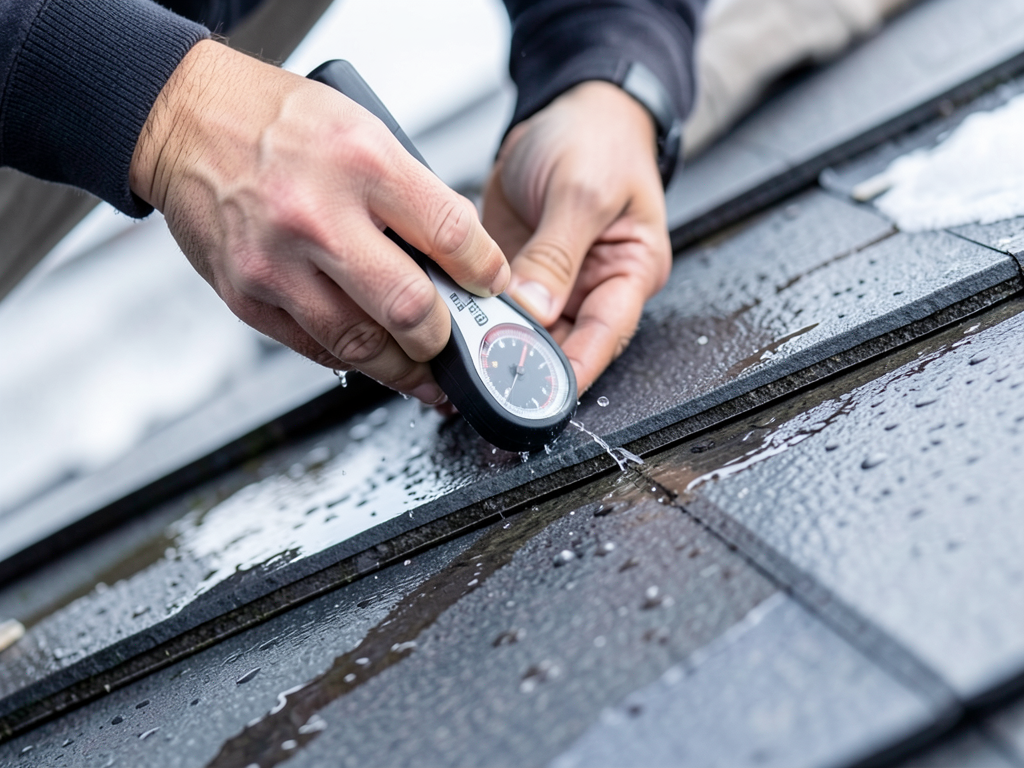
The screwdriver test becomes essential on extreme slopes. Using a moisture meter at multiple depths, technicians can identify water infiltration that isn’t visible from the surface. On a 12:12 pitch, water can travel horizontally several feet before showing visible signs inside the home.. Read more about Dealing With Multiple Roof Levels and “Pittsburgh Step” Homes in Woods Run.
<img decoding="async" src="
” alt=”Technician performing moisture meter testing on steep slope roof deck to detect hidden water infiltration” />
Why Experience Matters More Than Price
Choosing a contractor for extreme slope work based solely on price often leads to disaster. The difference between a properly installed steep slope roof and a problematic one isn’t visible in the final product—it’s in the preparation, safety protocols, and attention to detail during installation.
Experienced steep slope contractors understand that every roof pitch above 9:12 requires custom calculations for material quantities, fastener patterns, and underlayment overlaps. They know that standard installation guides don’t account for the wind loads and ice dam forces that extreme slopes experience.
The right contractor will also have established relationships with material suppliers who understand extreme slope requirements. They’ll know which products have proven track records in Pittsburgh’s climate and which manufacturer warranties actually cover the specific conditions your roof faces.
Preparing Your Property for Steep Slope Work
Homeowners often underestimate what’s required to prepare for extreme slope roofing. The work generates significant debris, requires extensive staging, and creates temporary vulnerabilities in your home’s weatherproofing.
Before work begins, protect landscaping with plywood barriers and remove any items within 15 feet of the work area. The staging and material delivery process requires clear access paths that standard roofing crews don’t need. Your driveway may be blocked for several days, and your yard will experience heavy equipment traffic.
Communication becomes critical during the project. Weather delays affect steep slope work more than standard roofing because safety conditions deteriorate rapidly in high winds or when surfaces become wet. A reputable contractor will keep you informed about schedule changes and explain the safety considerations behind each decision.
The Long-Term Value of Proper Installation
While extreme slope roofing costs more upfront, the long-term value often justifies the investment. A properly installed steep slope roof can last 40-50 years compared to 20-25 years for a standard installation. This extended lifespan means lower lifetime costs despite the higher initial investment.
Energy efficiency also improves with proper installation. The increased ventilation and moisture control prevent the attic heat buildup that forces air conditioning systems to work harder during Pittsburgh’s humid summers. Some homeowners report 15-20% reductions in cooling costs after upgrading from problematic steep slope installations.
Property values typically increase with quality steep slope roofing. The combination of improved curb appeal, enhanced weather protection, and reduced maintenance requirements makes your home more attractive to future buyers who understand the value of proper extreme slope work.
Frequently Asked Questions
How steep is too steep for standard roofing contractors?
Most standard roofing crews won’t work on pitches above 8:12 due to safety regulations and insurance requirements. Pitches above 10:12 require specialized equipment and training that only experienced steep slope contractors possess.
How long does steep slope roof replacement take?
Extreme slope work typically requires 3-5 days for a complete replacement, compared to 1-2 days for standard roofs. This includes additional time for safety setup, material handling, and the precision required for complex geometries.
Can I install solar panels on an extreme slope roof?
Yes, but it requires specialized mounting systems and engineering calculations. The increased wind loads and snow shedding characteristics of extreme slopes necessitate reinforced mounting hardware and strategic panel placement.
What permits are required for steep slope roofing in Pittsburgh?
All roofing work requires a building permit from the City of Pittsburgh. Work in historic districts also requires approval from the Historic Review Commission. Your contractor should handle all permit applications and inspections.
How do I know if my contractor is qualified for extreme slope work?
Ask for proof of OSHA steep slope certification, verify their insurance covers work above 10:12 pitch, and request references from similar projects in Polish Hill or other steep neighborhoods. A qualified contractor will readily provide this documentation.
Ready to Protect Your Polish Hill Home?
Don’t wait for the next storm to discover your steep slope roof has problems. The combination of Pittsburgh’s weather patterns and Polish Hill’s extreme topography creates conditions that demand specialized expertise. Generic roofing solutions simply won’t provide the protection your home needs.
Professional steep slope roofing requires understanding the unique physics of extreme pitches, the specific building codes that apply to your historic district, and the safety protocols that protect both workers and your property. This isn’t a job for general contractors or standard roofing crews.
Call (878) 209-5522 today to schedule your steep slope inspection. Our experienced team understands the unique challenges of Polish Hill’s extreme roofs and can provide the specialized expertise your home deserves.
Don’t risk your home’s protection or your family’s safety with inexperienced contractors. The right expertise makes all the difference when your roof is pitched at angles that would make most contractors walk away. Pick up the phone and call (878) 209-5522 before the next storm hits Polish Hill. For more information, visit NRCA Steep Slope Roofing Guidelines.
{
“@context”: “https://schema.org”,
“@type”: “BlogPosting”,
“headline”: “What Every Polish Hill Homeowner Needs to Know About Roofing on Extreme Slopes”,
“description”: “Discover why Polish Hill’s steep roofs require specialized expertise. Learn about safety protocols, materials, and local building codes for extreme slope roofing in Pittsburgh.”,
“wordCount”: 2349,
“datePublished”: “2026-05-07T10:21:00.000Z”,
“dateModified”: “2026-05-07T10:21:00.000Z”,
“inLanguage”: “en-US”,
“mainEntityOfPage”: {
“@type”: “WebPage”,
“@id”: “https://victoryroofingpittsburgh.com”
},
“publisher”: {
“@type”: “LocalBusiness”,
“name”: “Victory Roofing Pittsburgh”,
“url”: “https://victoryroofingpittsburgh.com”
},
“author”: {
“@type”: “Organization”,
“name”: “Victory Roofing Pittsburgh”,
“url”: “https://victoryroofingpittsburgh.com”
}
}
{
“@context”: “https://schema.org”,
“@type”: “RoofingContractor”,
“name”: “Victory Roofing Pittsburgh”,
“url”: “https://victoryroofingpittsburgh.com”,
“address”: {
“@type”: “PostalAddress”,
“addressLocality”: “Pittsburgh”
},
“areaServed”: {
“@type”: “City”,
“name”: “Pittsburgh”
}
}
{
“@context”: “https://schema.org”,
“@type”: “FAQPage”,
“mainEntity”: [
{
“@type”: “Question”,
“name”: “How steep is too steep for standard roofing contractors?”,
“acceptedAnswer”: {
“@type”: “Answer”,
“text”: “Most standard roofing crews won’t work on pitches above 8:12 due to safety regulations and insurance requirements. Pitches above 10:12 require specialized equipment and training that only experienced steep slope contractors possess.”
}
},
{
“@type”: “Question”,
“name”: “How long does steep slope roof replacement take?”,
“acceptedAnswer”: {
“@type”: “Answer”,
“text”: “Extreme slope work typically requires 3-5 days for a complete replacement, compared to 1-2 days for standard roofs. This includes additional time for safety setup, material handling, and the precision required for complex geometries.”
}
},
{
“@type”: “Question”,
“name”: “Can I install solar panels on an extreme slope roof?”,
“acceptedAnswer”: {
“@type”: “Answer”,
“text”: “Yes, but it requires specialized mounting systems and engineering calculations. The increased wind loads and snow shedding characteristics of extreme slopes necessitate reinforced mounting hardware and strategic panel placement.”
}
},
{
“@type”: “Question”,
“name”: “What permits are required for steep slope roofing in Pittsburgh?”,
“acceptedAnswer”: {
“@type”: “Answer”,
“text”: “All roofing work requires a building permit from the City of Pittsburgh. Work in historic districts also requires approval from the Historic Review Commission. Your contractor should handle all permit applications and inspections.”
}
},
{
“@type”: “Question”,
“name”: “How do I know if my contractor is qualified for extreme slope work?”,
“acceptedAnswer”: {
“@type”: “Answer”,
“text”: “Ask for proof of OSHA steep slope certification, verify their insurance covers work above 10:12 pitch, and request references from similar projects in Polish Hill or other steep neighborhoods. A qualified contractor will readily provide this documentation.”
}
},
{
“@type”: “Question”,
“name”: “Ready to Protect Your Polish Hill Home?”,
“acceptedAnswer”: {
“@type”: “Answer”,
“text”: “Don’t wait for the next storm to discover your steep slope roof has problems. The combination of Pittsburgh’s weather patterns and Polish Hill’s extreme topography creates conditions that demand specialized expertise. Generic roofing solutions simply won’t provide the protection your home needs.”
}
}
]
}
{
“@context”: “https://schema.org”,
“@type”: “BreadcrumbList”,
“itemListElement”: [
{
“@type”: “ListItem”,
“position”: 1,
“name”: “Home”,
“item”: “https://victoryroofingpittsburgh.com”
},
{
“@type”: “ListItem”,
“position”: 2,
“name”: “Blog”,
“item”: “https://victoryroofingpittsburgh.com/blog”
},
{
“@type”: “ListItem”,
“position”: 3,
“name”: “What Every Polish Hill Homeowner Needs to Know About Roofing on Extreme Slopes”
}
]
}
{
“@context”: “https://schema.org”,
“@type”: “Service”,
“serviceType”: “Roofing”,
“provider”: {
“@type”: “LocalBusiness”,
“name”: “Victory Roofing Pittsburgh”,
“url”: “https://victoryroofingpittsburgh.com”
},
“areaServed”: {
“@type”: “City”,
“name”: “Pittsburgh”
},
“description”: “Discover why Polish Hill’s steep roofs require specialized expertise. Learn about safety protocols, materials, and local building codes for extreme slope roofing in Pittsburgh.”
}